Buying a New Car in Canada 2026: Dealer Tricks, Financing and Best Deals

Thinking about buying a new car in Canada in 2026? You're not alone—many Canadians are eyeing the latest models, especially with fresh government incentives making electric vehicles more accessible. B...
The Lifetimes Canada editorial team curates, fact-checks, and updates guides on personal finance, property, health, immigration, legal, business, and lifestyle topics relevant to Lifetimes Canada readers. Articles are produced with AI assistance and reviewed by the editorial team before publication.
Thinking about buying a new car in Canada in 2026? You're not alone—many Canadians are eyeing the latest models, especially with fresh government incentives making electric vehicles more accessible. But before you sign on the dotted line, arm yourself with knowledge on spotting dealer tricks, smart financing, and snagging the best deals to drive away happy.
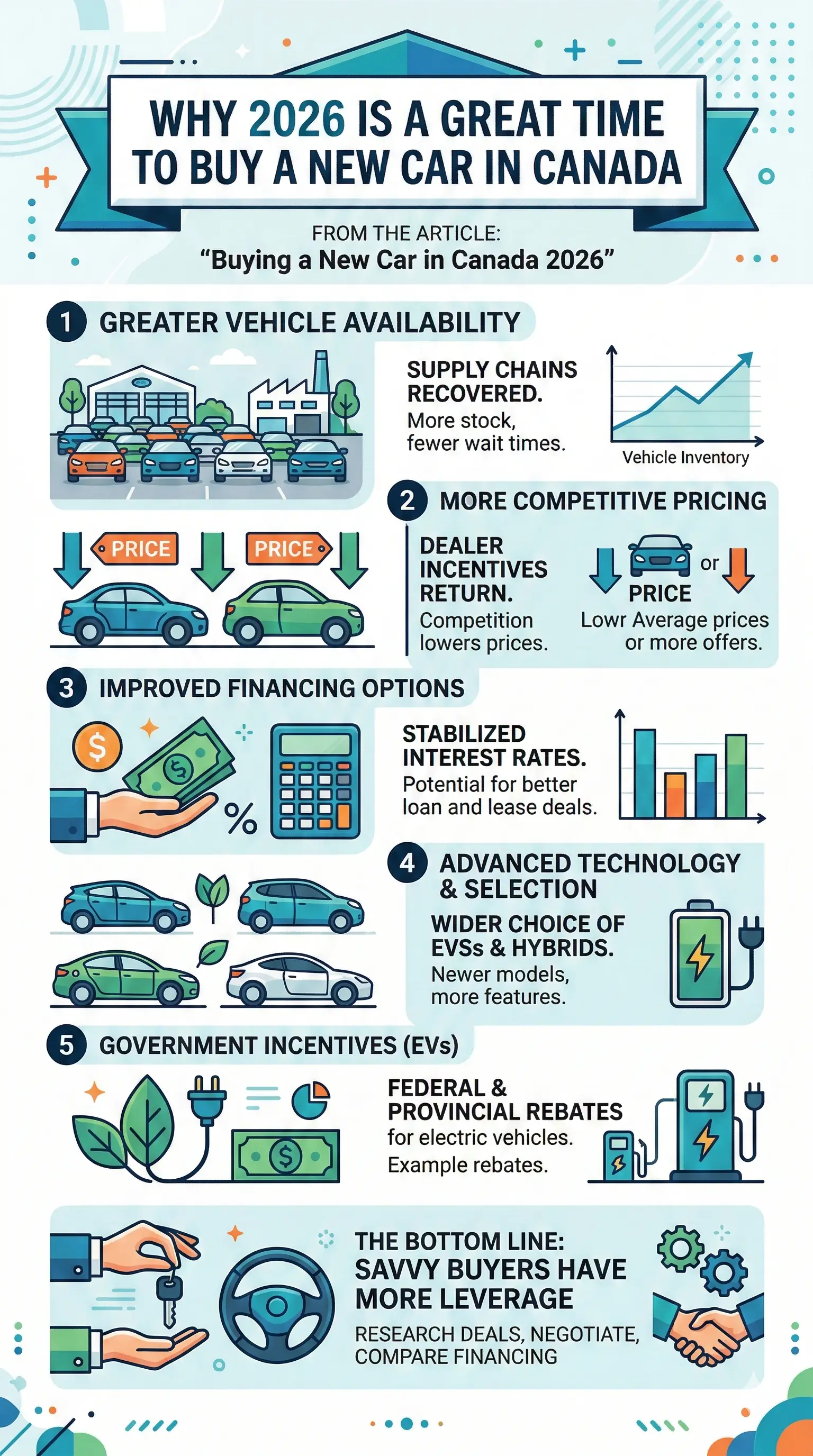
Why 2026 Is a Great Time to Buy a New Car in Canada
The automotive landscape is shifting fast. Prime Minister Carney's new automotive strategy, announced in January 2026, aims to boost jobs and position Canada as a leader in next-generation vehicles. A key highlight? A five-year EV affordability program launching February 16, 2026, offering up to $5,000 for battery electric or fuel-cell vehicles and $2,500 for plug-in hybrids (PHEVs)—as long as the final transaction value is up to $50,000 (no cap for Canadian-made EVs). This builds on past incentives that grew EV market share from 3.1% in 2019 to 15.4% in 2024.
Expect more affordable EVs from manufacturers earning tradeable import credits for Canadian production and investments. Provincial variations apply, so check your area's rules via canada.ca.
Best Times for Deals in 2026
Timing matters. End-of-month, quarter, or year pushes dealers to meet quotas, often yielding discounts. Holiday weekends like Canada Day or Labour Day spark promotions too. For 2026 specifics, monitor seasonal trends—winter clears inventory for spring models, while summer road-trip fever might inflate prices.
Common Dealer Tricks to Watch Out For
Dealerships aren't all bad, but some use high-pressure tactics. Here's how to stay sharp:
- Yo-yo financing: They approve a low rate, then "call back" claiming errors and push a worse deal. Get everything in writing upfront.
- Lowball trade-ins: They'll undervalue your old car to inflate the new one's appeal. Research values on CarGurus.ca or AutoTrader.ca first.
- Add-on upsells: Rustproofing, extended warranties, or nitrogen-filled tires sound great but often aren't worth it. Politely say no—many are pure profit for them.
- Bait-and-switch: Advertised "hot deal" vanishes; they steer you to pricier stock. Walk if it smells off.
Pro tip: Visit mid-week when it's quieter—salespeople have time to negotiate without rush.
Financing Your New Car: Lease vs. Buy in 2026
Financing is key for most buyers. Dealerships offer in-house options tied to banks, but shop around for better rates. Newcomers or those building credit? Many dealers provide newcomer programs with prime rates or even $0 down.
Lease or Finance? A Quick Comparison
| Option | Pros | Cons | Best For |
|---|---|---|---|
| Leasing | Lower monthly payments; drive new models often; mileage limits keep costs down. | No ownership at end; potential fees for excess wear/miles. | Low-mileage drivers wanting latest tech. |
| Financing (Loan) | Build equity; own the car outright; flexible terms. | Higher payments; interest adds up. | Long-term keepers. |
Pre-approval from your bank or credit union locks in rates—aim for under 5% in 2026's market. Factor HST (13-15% depending on province), freight/PDI fees (~$2,000), and air conditioning tax (~$100). Use the CRA's auto loan interest deduction if it's for business use via cra-arc.gc.ca.
EV Financing Perks
That new EV program sweetens deals—stack it with low-rate green loans from banks like RBC or TD. Eligible vehicles must be Canadian-made or from FTA countries.
Step-by-Step Guide to Buying Your New Car
- Set Your Budget: Beyond sticker price, add insurance (~$1,500-3,000/year), fuel/maintenance, and registration. Use tools like Ratehub.ca for quotes.
- Get Licensed and Insured: Valid driver's licence is essential—exchange foreign ones where possible via provincial sites like DriveTest (ON) or ICBC (BC). Proof of insurance required pre-purchase.
- Research and Test Drive: Compare models on AutoTrader or dealer sites. Insist on a thorough test drive.
- Negotiate: Start 10-15% below MSRP. Focus on out-the-door price (total cost).
- Review Paperwork: Bill of sale, financing contract, warranty. No pressure—sleep on it.
- Register: Provincial motor vehicle branch handles plates/ownership. Dealers often assist.
For newcomers: Build credit via secured cards or newcomer loans first.
Finding the Best Deals on New Cars in 2026
Hunt promotions via manufacturer sites (Toyota.ca, Kia.ca) or aggregators like Unhaggle.com. EVs lead deals thanks to incentives—projected 840,000 boosted sales. Certified pre-owned new-ish models offer warranties at used prices.
- Check StatCan CPI for inflation trends affecting prices.
- Province-specific: Quebec's EV rebates via quebec.ca; BC's CleanBC Go Electric.
FAQ: Buying a New Car in Canada 2026
Q: Do I need a Canadian credit score to finance?
A: Not always—newcomer programs accept alternative income proof or $0 down.
Q: What's the EV incentive exactly?
A: Up to $5,000 for BEVs/PHEVs under $50,000 (no cap for Canadian-made), starting Feb 16, 2026.
Q: How much are new car taxes?
A: HST/GST/PST varies: 13% ON, 15% Atlantic. Plus green levy if applicable.
Q: Can dealers handle registration?
A: Yes, many do—saves hassle.
Q: Best cars for Canadian winters?
A: AWD models like Subaru Forester or Toyota RAV4 with EV options emerging.
Q: Avoid private sales for new cars?
A: Stick to dealers for new—they meet safety standards and offer financing.
Next Steps: Drive Home Your Dream Car
Ready? Research models, get pre-approved, and visit 2-3 dealers. Compare quotes, test drive, and leverage 2026's EV incentives for savings. Consult canada.ca consumer affairs for disputes. With these tips, you'll dodge tricks, finance smartly, and score top deals. Safe drives ahead!