Ledger Nano X vs Trezor Safe 3: Best Cold Wallet for Canadians in 2026
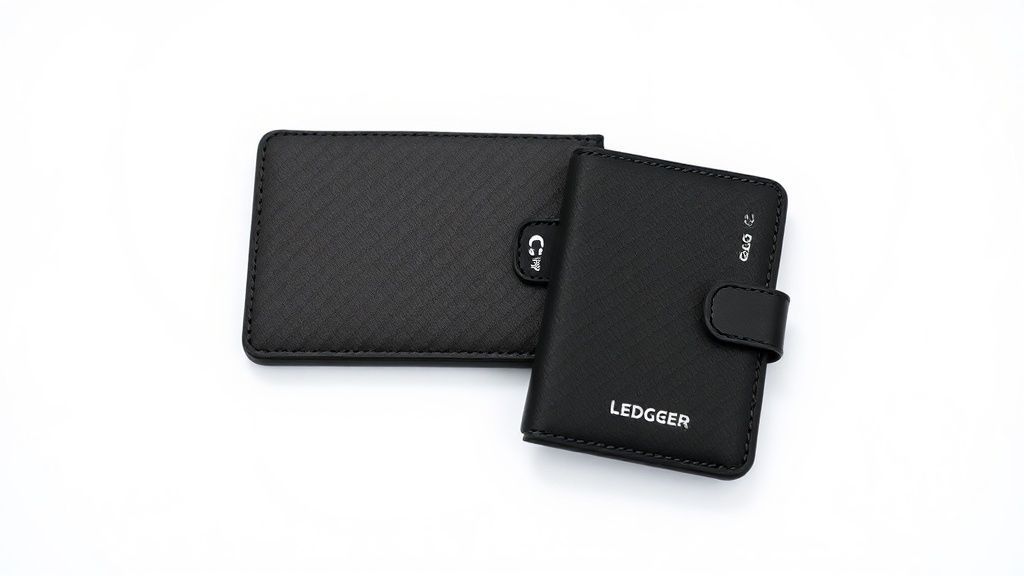
As Canadians dive deeper into cryptocurrency investments, choosing the right cold wallet is crucial for safeguarding assets against hacks and theft. The **Ledger Nano X** and **Trezor Safe 3** stand o...
The Lifetimes Canada editorial team curates, fact-checks, and updates guides on personal finance, property, health, immigration, legal, business, and lifestyle topics relevant to Lifetimes Canada readers. Articles are produced with AI assistance and reviewed by the editorial team before publication.
As Canadians dive deeper into cryptocurrency investments, choosing the right cold wallet is crucial for safeguarding assets against hacks and theft. The **Ledger Nano X** and **Trezor Safe 3** stand out as top contenders in 2026, offering robust security for holding Bitcoin, Ethereum, and thousands of altcoins while complying with our evolving crypto regulations.
With the Canada Revenue Agency (CRA) requiring detailed reporting of crypto transactions on your tax return, a reliable hardware wallet ensures your private keys stay offline and secure.[1] We'll compare these two devices head-to-head, focusing on what matters most to Canadian users: security, ease of use, coin support, and integration with local exchanges like Wealthsimple Crypto or Shakepay.
Why Cold Wallets Matter for Canadians in 2026
Cold wallets, or hardware wallets, keep your crypto offline, protecting against online threats like phishing or exchange hacks—issues we've seen with platforms such as the 2022 Ronin Network breach that affected global users, including some Canadians.[2] In Canada, where crypto adoption is rising with over 10 million users by 2026 estimates, the CRA treats crypto as a commodity, meaning capital gains taxes apply on disposals.[3]
For RRSP or TFSA holders eyeing crypto exposure, self-custody via cold wallets avoids third-party risks. Both Ledger Nano X and Trezor Safe 3 support seamless integration with tax tools like Koinly or CoinLedger, which connect directly to CRA-preferred formats for T1 filings.[4]
Price Comparison: Value for Your Loonie
Budget plays a big role for everyday Canadians. The **Trezor Safe 3** starts at around $79 CAD, making it an accessible entry point, while the **Ledger Nano X** retails for about $149 CAD—reflecting its premium features like Bluetooth.[2][5]
| Model | Price (CAD approx.) | Best For |
|---|---|---|
| Ledger Nano X | $149 | Mobile users needing Bluetooth |
| Trezor Safe 3 | $79 | Budget-conscious beginners |
Trezor wins on affordability, ideal if you're starting with Bitcoin holdings under $10,000. Ledger justifies the extra cost with broader app support for Canadian DeFi platforms.[2]
Security Features: Protecting Against Real Threats
Secure Elements and Certifications
The Ledger Nano X uses an industry-leading secure element chip with CC EAL5+ certification, shielding private keys from physical attacks.[1][3] Trezor Safe 3, fully open-source, employs EAL6+ certification and supports SLIP39 Shamir backups for splitting seeds across multiple shares—great for estate planning under Canadian succession laws.[3][5]
Ledger's closed-source element adds tamper resistance, while Trezor's transparency appeals to privacy-focused users wary of supply-chain risks.[4]
Connectivity and Attack Vectors
Ledger Nano X offers Bluetooth and USB-C, enabling wireless signing on iOS or Android—perfect for on-the-go verification with Shakepay's mobile app.[3] Trezor Safe 3 sticks to USB-C, reducing Bluetooth vulnerabilities but limiting mobility.[5]
- Ledger Nano X: Anti-Klepto protocol, deterministic nonces (RFC6979), passphrase via device buttons.[6]
- Trezor Safe 3: 100% air-gapped option in Bitcoin-only mode, multi-sig PSBT support.[6]
For Canadians, both resist keyloggers common in phishing scams targeting EI recipients or CPP investors new to crypto.[7]
Coin and Token Support: Covering Your Portfolio
Ledger Nano X supports over 15,000 coins and tokens, including niche Canadian projects on Ethereum or Solana—far outpacing Trezor Safe 3's thousands via Trezor Suite.[3][5] If you're trading on Newton or Bitbuy, Ledger's third-party wallet compatibility shines for ERC-20 tokens and NFTs.[2]
Trezor excels in Bitcoin-only setups, with testnet support for testing without risking real funds—a practical tip for CRA audit prep.[6]
Ease of Use and Design for Everyday Canadians
Setup is straightforward for both: generate a 24-word BIP39 seed (Ledger) or BIP39/SLIP39 (Trezor), verify on-device, and pair with apps.[7] Ledger Nano X's 128x64 OLED screen and Bluetooth make it mobile-friendly for Toronto commuters, while Trezor Safe 3's two-button interface suits desktop users in rural areas.[3][5]
Ledger's companion app is feature-rich for portfolio tracking, syncing with CoinLedger for CRA T1135 foreign asset reporting if holdings exceed $100,000 CAD.[2]
Canadian-Specific Considerations
Both wallets integrate with Canadian exchanges: export addresses to Wealthsimple for deposits, or use Trezor's passphrase for hidden wallets compliant with PIPEDA privacy rules.[4] For taxes, connect to Koinly.io, which handles CRA's barter transaction rules automatically.[7]
In 2026, with OSC regulations tightening on crypto custody, self-hosted wallets like these keep you in control—no KYC leaks.[3] Pro tip: Store seeds in a fireproof safe and share Shamir shares with trusted family for probate avoidance.
Pros and Cons Head-to-Head
| Feature | Ledger Nano X | Trezor Safe 3 |
|---|---|---|
| Price | Higher ($149) | Lower ($79) |
| Security Cert | EAL5+ (Secure Element) | EAL6+ (Open-Source) |
| Connectivity | Bluetooth + USB-C | USB-C |
| Coin Support | 15,000+ | Thousands |
| Display | 128x64 OLED | Two-button |
| Backup | BIP39 | BIP39/SLIP39 |
Which is the Best Cold Wallet for Canadians in 2026?
For most Canadians, the **Ledger Nano X** edges out as the best overall due to its vast coin support, Bluetooth mobility, and app ecosystem—ideal for diversified portfolios.[2][3] Choose Trezor Safe 3 if you're Bitcoin-maximalist on a budget or prioritise open-source transparency.[5]
Frequently Asked Questions
Ready to secure your crypto? Start by buying from official Ledger or Trezor stores, set up on a clean device, and test with small amounts. Consult cra-arc.gc.ca for latest tax guidance, and consider pairing with a multisig setup for high-value holdings. Your financial future in crypto starts with the right cold wallet.
Sources & References
- 1
-
2
Ledger vs. Trezor: Investor's Guide 2026 - CoinLedger — coinledger.io
-
3
Best hardware wallets 2026: Ledger vs Trezor vs SafePal vs NGRAVE — Crypto Briefing — cryptobriefing.com
-
4
Ledger vs Trezor Hardware Wallets - The Comparison 2026 — Hardware-Wallets.net — www.hardware-wallets.net
-
5
Ledger vs Trezor 2026: Which Wallet is Better? — Datawallet — www.datawallet.com
-
6
Ledger Nano X vs Trezor Safe 3 Bitcoin-Only — The Bitcoin Hole — thebitcoinhole.com
- 7
Related Articles
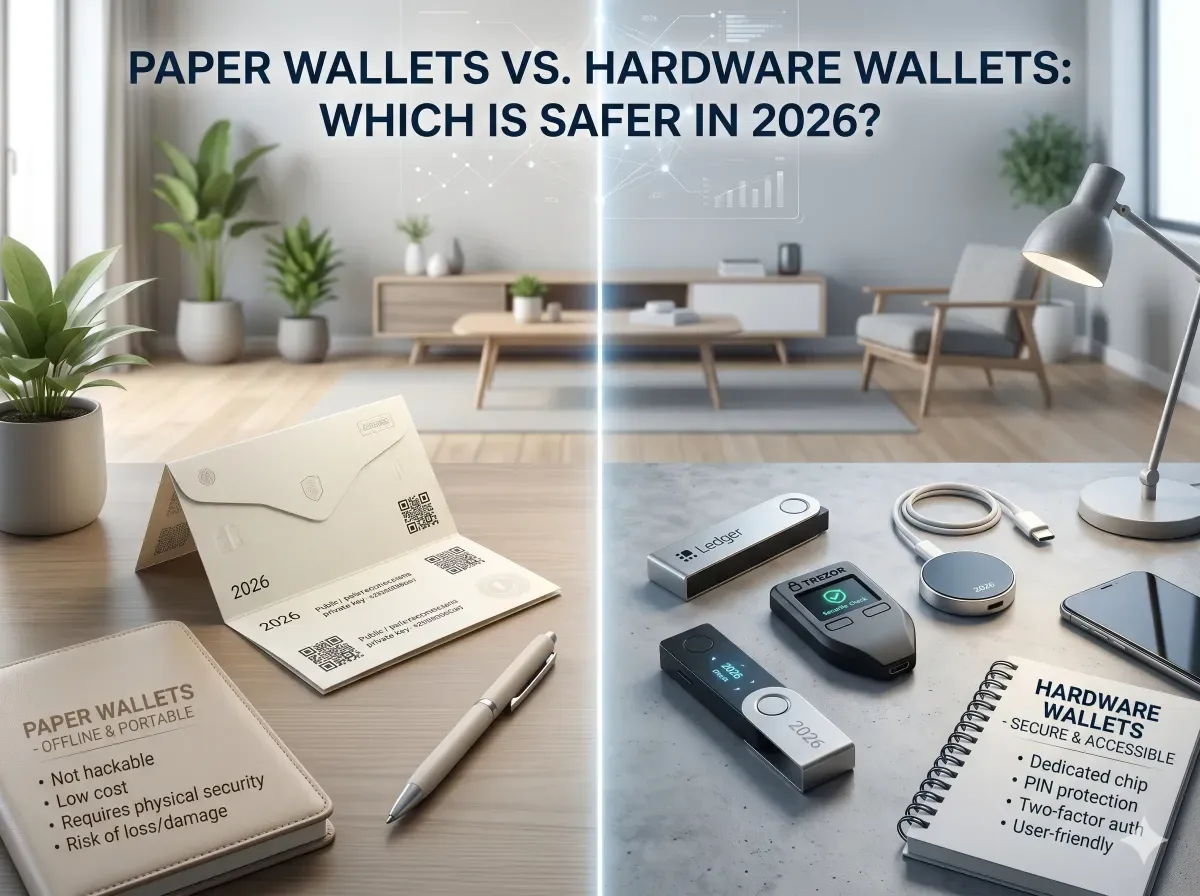
Paper Wallets vs Hardware Wallets: Which is Safer in 2026?
If you've been holding cryptocurrency for any length of time, you've likely heard the debate: is a paper wallet or a hardware wallet the safer option? In 2026, with cyber threats evolving and Canadian...
Best Seed Phrase Storage Options in 2026 (Metal Wallets Reviewed)
Imagine losing access to your cryptocurrency holdings because your seed phrase got wet, burned, or stolen—it's a nightmare no Canadian crypto holder wants to face. In 2026, with Bitcoin and Ethereum p...
How to Transfer Crypto from Wealthsimple to a Ledger Wallet
Ever bought crypto on Wealthsimple and wondered how to take full control by moving it to your own hardware wallet? Transferring your cryptocurrency from Wealthsimple to a Ledger wallet is a smart move...