Best Dental Insurance Canada 2026: New Federal Dental Plan vs Private

Navigating dental insurance options in Canada has never been more crucial, especially with the Canadian Dental Care Plan (CDCP) now fully operational in 2026. Whether you're weighing the new federal p...
The Lifetimes Canada editorial team curates, fact-checks, and updates guides on personal finance, property, health, immigration, legal, business, and lifestyle topics relevant to Lifetimes Canada readers. Articles are produced with AI assistance and reviewed by the editorial team before publication.
Navigating dental insurance options in Canada has never been more crucial, especially with the Canadian Dental Care Plan (CDCP) now fully operational in 2026. Whether you're weighing the new federal program against private plans, this guide breaks down the **best dental insurance Canada 2026** choices to help you save money and protect your smile.
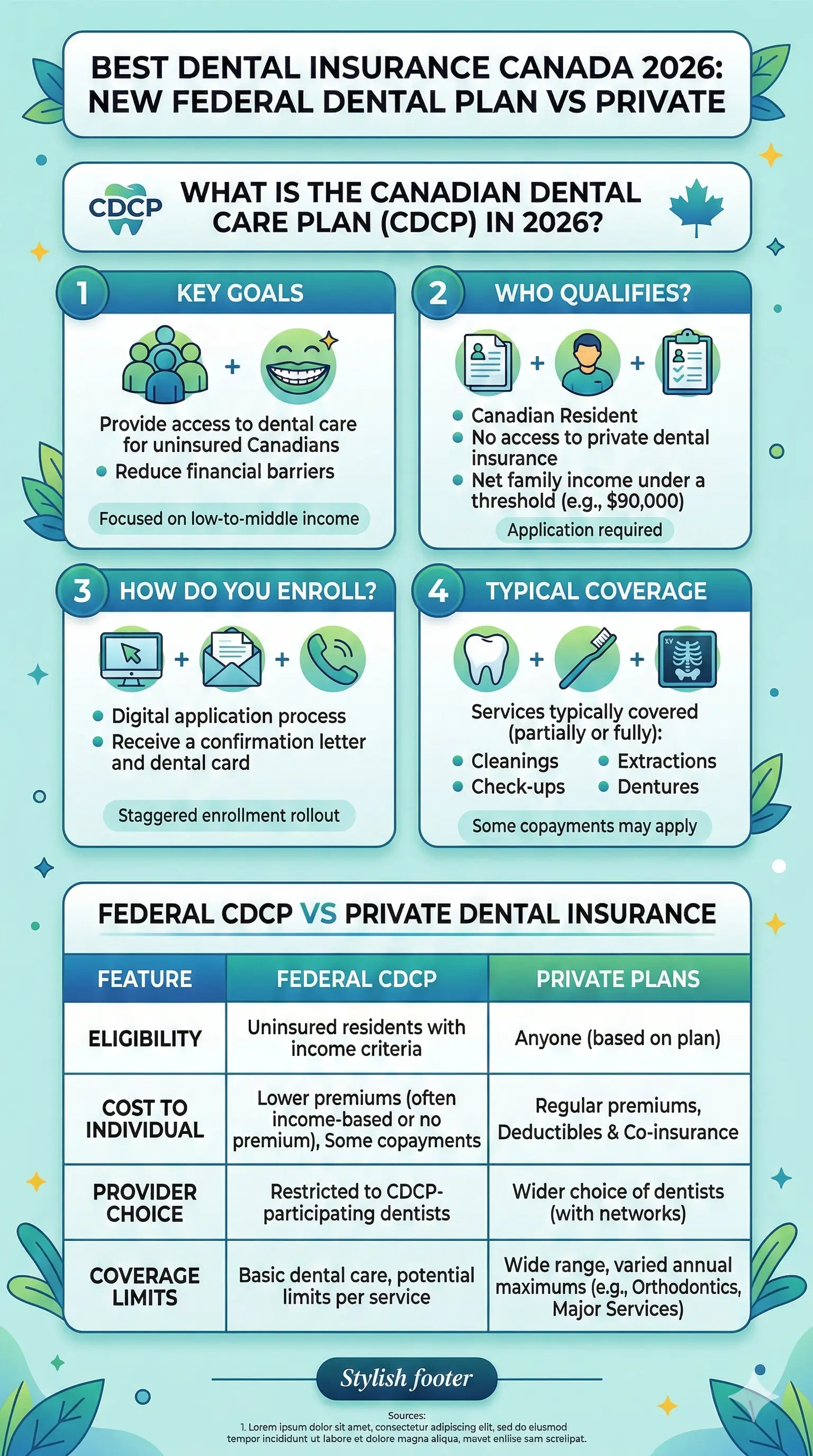
What is the Canadian Dental Care Plan (CDCP) in 2026?
The CDCP is a federally funded program administered by Sun Life and set by Health Canada, providing subsidized dental coverage to around 9 million eligible Canadians. Fully rolled out nationwide by January 2026, it targets essential oral health care for those without adequate private or provincial coverage.
Unlike traditional insurance, the CDCP acts as a payer using its own federal fee schedule, not provincial dental fee guides. Coverage isn't permanent—you must renew annually by filing taxes and updating income details.
CDCP Eligibility Criteria
To qualify in 2026, you need:
- No access to private dental insurance or provincial/territorial plans.
- Valid Canadian residency and Social Insurance Number.
- Family net income under $90,000 (adjusted annually).
Seniors 65+, children under 18, and those with a Disability Tax Credit certificate get priority, but all ages can apply if criteria are met. If you have other government coverage, plans coordinate to avoid overlaps.
CDCP Coverage Levels by Income (2026)
Your out-of-pocket costs depend on adjusted family net income:
| Family Income | CDCP Covers | You Pay |
|---|---|---|
| Under $70,000 | 100% | 0% |
| $70,000–$79,999 | 60% | 40% |
| $80,000–$89,999 | 40% | 60% |
| $90,000+ | Not eligible | 100% |
Note: CDCP fees often fall short of actual dental office costs, so you may pay the balance even at 100% coverage.
What Does CDCP Cover in 2026?
Covered services focus on essentials:
- Exams (routine/emergency), X-rays (limited), cleanings/scaling.
- Fillings, root canals, extractions.
- Dentures (partial/complete with pre-authorization), crowns (limits: 4 per 120 months, 1 per tooth every 96 months; no implants).
- Nitrous oxide, emergency pain relief.
Exclusions: Cosmetic work (whitening), implants, routine orthodontics (braces/Invisalign), major periodontal beyond basics.
CDCP Renewal Process for 2026
Renew by June 1, 2026, after filing 2025 taxes:
- Receive tax assessment (March–April 2026).
- Apply/renew online via Sun Life portal.
- New coverage: July 1, 2026–June 30, 2027.
Miss it? Coverage lapses June 30, 2026—no retroactive reimbursements.
Private Dental Insurance in Canada: Top Options for 2026
Private plans from providers like Sun Life, Manulife, Green Shield, and Desjardins offer broader coverage, higher fee schedules, and extras like orthodontics—ideal if you're ineligible for CDCP or need more comprehensive protection.
Key Benefits of Private Plans
- Flexible coverage: Includes cosmetics, implants, orthodontics (often with lifetime max $2,000–$5,000).
- Higher reimbursement: Up to 80–100% on provincial fee guides, not federal limits.
- No income test: Available to all, often via employer groups or individual policies.
- Immediate access: No waiting periods for basics in many plans.
Popular 2026 picks: Sun Life's Dental Plan (CDCP coordinator), Manulife CoverMe (customizable), Green Shield (non-profit, high limits).
Private Plan Costs (Average 2026 Premiums)
Monthly premiums vary by age/coverage:
| Age Group | Basic ($1,500–$2,000 annual max) | Enhanced ($2,500+ max, ortho/implants) |
|---|---|---|
| Adult (30–64) | $30–$50 | $60–$100 |
| Senior (65+) | $40–$60 | $70–$120 |
| Family | $80–$150 | $150–$300 |
Employer-sponsored plans cut costs by 50–70% via group rates. Shop via Insurance Bureau of Canada or brokers for quotes.
CDCP vs Private Dental Insurance: Which is Best for You in 2026?
The **best dental insurance Canada 2026** depends on your needs—CDCP suits low-income basics, while private excels in comprehensive care.
Comparison Table
| Feature | CDCP | Private |
|---|---|---|
| Coverage Scope | Essentials only (no cosmetics/implants) | Broad (cosmetics, ortho, implants) |
| Cost to You | 0–60% co-pay + fee gaps | Premiums + 0–50% deductibles |
| Eligibility | Income <$90K, no other coverage | Open to all |
| Waiting Periods | None post-approval | 3–12 months for majors |
| Annual Limits | Fee schedule caps | $1,500–$5,000+ |
| Renewal | Annual tax-based | Monthly/annual premium |
Pros & Cons
CDCP Pros: Free/low-cost basics for eligible; coordinates with other plans. Cons: Limited services, lower fees, renewal hassle.
Private Pros: More services, higher payouts. Cons: Premiums add up, exclusions/deductibles.
"The CDCP will help improve access for vulnerable populations, but many will still need supplemental private coverage for full protection."
Practical Tips: Choosing and Maximising Your Dental Coverage
- Check eligibility first: Use the Sun Life CDCP portal or call 1-833-537-4342.
- Coordinate plans: CDCP works with private/employer benefits—claim CDCP first.
- Compare quotes: Use Canadian Life and Health Insurance Association tools for private options.
- Pre-authorize majors: Crowns/dentures need approval under CDCP.
- Find participating dentists: Most accept CDCP; verify via Sun Life grids (updated April 2025, applicable 2026).
- Budget for gaps: Save in TFSA/RRSP for uncovered costs like implants ($3,000–$5,000/tooth).
Next Steps for Your Dental Coverage
Assess your income, needs, and current benefits today. Apply for CDCP at canada.ca if eligible, or get private quotes from three providers. Schedule a check-up—prevention saves thousands. With smart choices, you'll secure the **best dental insurance Canada 2026** tailored to you.
Frequently Asked Questions
Sources & References
-
1
What is the Canadian Dental Care Plan? Complete 2026 Guide — dentistryonguelph.com
-
2
Canadian Dental Care Plan - Dental Benefits Guide — www.canada.ca
-
3
Canadian Dental Care Plan Renewal 2025–2026: Complete Guide — wilsoneastdental.com
-
4
Canadian Dental Care Plan (CDCP) — www.cda-adc.ca
-
5
Canadian Dental Care Plan for Seniors in 2026 | CDCP Guide — www.morrisondental.ca
-
6
What Is the Canadian Dental Care Plan? [Updated 2025/2026] — hometowndental.ca
-
7
Canadian Dental Care Plan - Canada.ca — www.canada.ca
-
8
Dental benefit grids - Canadian Dental Care Plan (CDCP) - Sun Life — www.sunlife.ca