Best Universities in Canada 2026: Rankings, Tuition and Graduate Outcomes

Canada's university system consistently ranks among the world's finest, with institutions recognised for research excellence, innovative teaching, and strong graduate outcomes. Whether you're a Canadi...
The Lifetimes Canada editorial team curates, fact-checks, and updates guides on personal finance, property, health, immigration, legal, business, and lifestyle topics relevant to Lifetimes Canada readers. Articles are produced with AI assistance and reviewed by the editorial team before publication.
Canada's university system consistently ranks among the world's finest, with institutions recognised for research excellence, innovative teaching, and strong graduate outcomes. Whether you're a Canadian student planning your next steps or an international learner considering study options, understanding the top universities and what they offer is essential for making an informed decision.
Canada's Top Universities in 2026
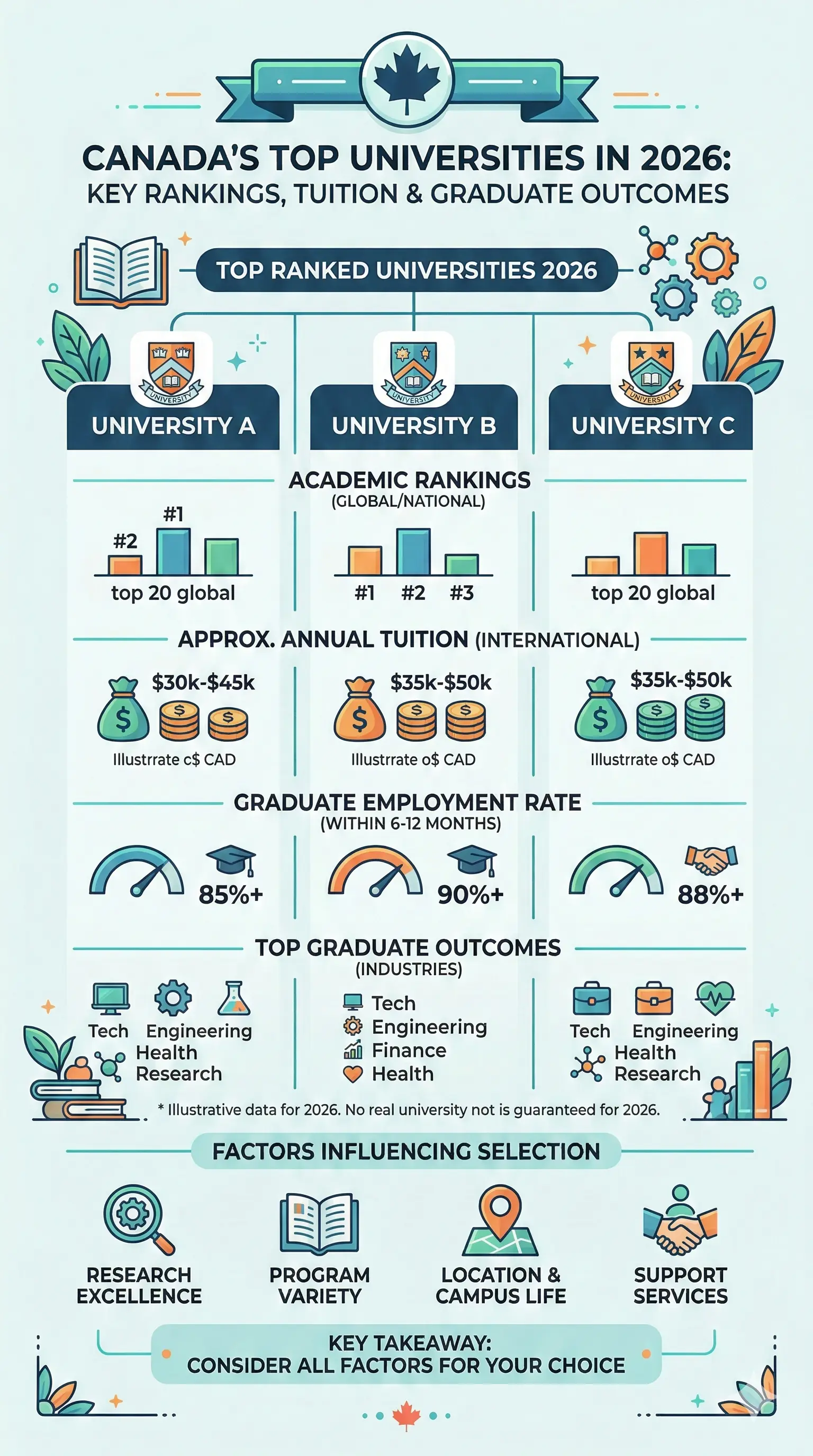
The leading Canadian universities have maintained their positions at the forefront of global education. According to the latest rankings, the University of Toronto leads by a significant margin, followed by McGill University and the University of British Columbia (UBC). These three institutions consistently appear in the world's top 100 universities across multiple ranking systems.
Beyond the top three, Canada's research-intensive universities continue to strengthen their positions. McMaster University, University of Alberta, University of Waterloo, University of Montreal, Western University, University of Calgary, and University of Ottawa round out the top 10 English-taught universities in Canada.
Understanding University Rankings
Multiple ranking systems evaluate Canadian universities, including the Shanghai Ranking, QS World University Rankings, and Times Higher Education (THE) rankings. Each uses different criteria—research output, teaching quality, international reputation, and employer connections—so institutions may rank differently depending on the system. For example, McGill ranks first in the QS 2026 ranking, whilst Toronto leads in other systems.
Importantly, Canada currently has 129 verified universities, with 69 ranked as top by country and 6 earning elite university status. This diversity means excellent options exist beyond the top 10 for specific programmes and regional preferences.
Master's Programme Opportunities and Tuition Costs
If you're considering a Master's degree, Canadian universities offer extensive options. McMaster University offers over 130 graduate programmes with average annual tuition around CAD $17,000. The University of Ottawa provides over 160 graduate programmes, though tuition is higher at approximately CAD $25,700 annually.
For those in Alberta, the University of Calgary offers 80 graduate programmes with more affordable tuition at around CAD $14,500 per year. These figures represent international student rates; domestic Canadian students typically pay significantly less through provincial funding mechanisms.
Comparing Tuition Across Top Universities
Tuition varies considerably depending on the institution and programme type:
- McMaster University: ~CAD $17,000 annually
- University of Calgary: ~CAD $14,500 annually
- University of Ottawa: ~CAD $25,700 annually
These figures typically cover tuition only and don't include living expenses, which vary by city. Toronto and Vancouver generally have higher living costs than Calgary or Ottawa. When budgeting for your studies, factor in accommodation, food, transportation, and health insurance.
What Makes These Universities Stand Out
Research Excellence and Industry Connections
Canada's top universities distinguish themselves through robust research programmes and partnerships with industry leaders. McMaster University, for instance, is research-intensive with a truly global community—over 25% of its graduate population comes from 87 different countries. This international environment enriches the learning experience and creates valuable global networks.
The University of Calgary emphasises bringing together academic excellence with practical experience, offering personalised advising and support services alongside rigorous coursework. Similarly, the University of Ottawa's capital-city location provides unique access to world-renowned laboratories and federal institutions.
Support for International Students
Canadian universities actively recruit and support international students. Beyond academic programmes, they offer:
- Dedicated international student services
- Networking opportunities with peers from diverse backgrounds
- Career placement support and alumni connections
- Flexible study options (online, on-campus, and blended formats)
Many universities now offer online and blended learning options, providing flexibility for students balancing work and study commitments.
Choosing the Right University for Your Goals
Consider Your Programme Focus
Different universities excel in different fields. Before applying, research which institutions have strong programmes in your area of interest. University websites typically detail faculty expertise, research centres, and graduate outcomes by programme.
Location Matters
Canada's geography is vast, and location affects your experience significantly. Toronto and Vancouver offer vibrant urban environments with high costs of living. Calgary and Ottawa provide more affordable alternatives with strong academic reputations. Consider proximity to your family, climate preferences, and the job market in each region.
Funding Your Education
As a Canadian student, you may be eligible for provincial student loans, federal loans through the Canada Student Loans Programme, and various scholarships. International students should explore:
- University-specific scholarships and bursaries
- Government of Canada awards
- Employer sponsorship programmes
- Professional association funding
The Government of Canada's official education portal (canada.ca) provides comprehensive information about funding options and application processes.
Graduate Outcomes and Career Prospects
Employers worldwide value degrees from Canada's top universities. Graduates report strong employment outcomes, particularly when they've engaged in research, internships, and industry partnerships during their studies. Many universities track graduate employment rates and salary outcomes—request this data when evaluating programmes.
Canada's post-graduation work permit programme allows international graduates to gain Canadian work experience, which can lead to permanent residency. This pathway makes Canadian education particularly attractive for those seeking to establish careers in North America.
Emerging Trends in Canadian Higher Education
Canada's university sector is adapting to significant changes. Policy shifts, funding pressures, and evolving employer needs are reshaping programmes across institutions. Universities performing best are those providing learners with clarity about career pathways, confidence in their skills, and credible employment outcomes.
New programme categories are emerging in response to market demand, particularly in:
- Advanced data and technology roles
- Healthcare and life sciences
- Applied professional credentials
- Business and management specialisations
If you're planning your education strategy, consider how your chosen programme aligns with current and future job market demands.
Frequently Asked Questions
What's the difference between Canadian and international tuition fees?
Canadian citizens and permanent residents pay domestic tuition rates, which are significantly lower than international rates—often 50-75% less. International students pay substantially more, though tuition at Canadian universities remains competitive compared to the United States and other English-speaking countries.
Can I work whilst studying in Canada?
Yes. International students can typically work up to 20 hours per week during the academic term and full-time during scheduled breaks. This helps offset living expenses and provides valuable Canadian work experience.
How long does a Master's degree take in Canada?
Most Master's programmes in Canada take 1-2 years to complete, depending on whether you're pursuing a thesis-based or course-based degree. Thesis-based programmes typically take longer but offer more research opportunities.
Are online degrees from Canadian universities respected?
Yes. Many of Canada's top universities now offer online and blended programmes with the same rigour and credentials as on-campus options. Employers generally recognise these degrees equally, particularly when the university is well-established.
What's the best way to compare universities?
Look beyond rankings. Compare specific factors: programme quality in your field, faculty expertise, graduate employment outcomes, location, cost, and campus culture. Visit university websites, speak with current students, and contact admissions offices with specific questions about your interests.
Do Canadian universities offer scholarships to international students?
Many do, though scholarships for international students are often more limited than for domestic students. Research university-specific awards, government-sponsored programmes, and external funding sources. Some universities offer entrance scholarships based on academic merit.
Your Next Steps
Choosing a university is a significant decision that shapes your academic and professional future. Start by clarifying your goals: Are you seeking a specific degree? Do you prefer a particular region? What's your budget? Once you've answered these questions, research programmes at Canada's top institutions using their official websites and prospectus materials.
Visit campuses if possible—either in person or through virtual tours. Connect with current students and alumni to understand the real experience beyond rankings and marketing materials. Apply to multiple universities to increase your options, and begin exploring funding opportunities early in your planning process.
Canada's universities offer world-class education, strong career outcomes, and welcoming communities. With careful research and planning, you'll find an institution that aligns perfectly with your aspirations.