Business Insurance Canada 2026: Complete Guide for Small Business Owners

Running a small business in Canada is rewarding, but unexpected risks like lawsuits, property damage, or cyber attacks can threaten everything you've built. In 2026, with rising legal costs and evolvi...
The Lifetimes Canada editorial team curates, fact-checks, and updates guides on personal finance, property, health, immigration, legal, business, and lifestyle topics relevant to Lifetimes Canada readers. Articles are produced with AI assistance and reviewed by the editorial team before publication.
Running a small business in Canada is rewarding, but unexpected risks like lawsuits, property damage, or cyber attacks can threaten everything you've built. In 2026, with rising legal costs and evolving threats, the right business insurance isn't just smart—it's essential for your survival and growth. This complete guide breaks down Business Insurance Canada 2026 essentials for small business owners, helping you navigate provincial requirements, coverage types, costs, and trends tailored to our Canadian landscape.
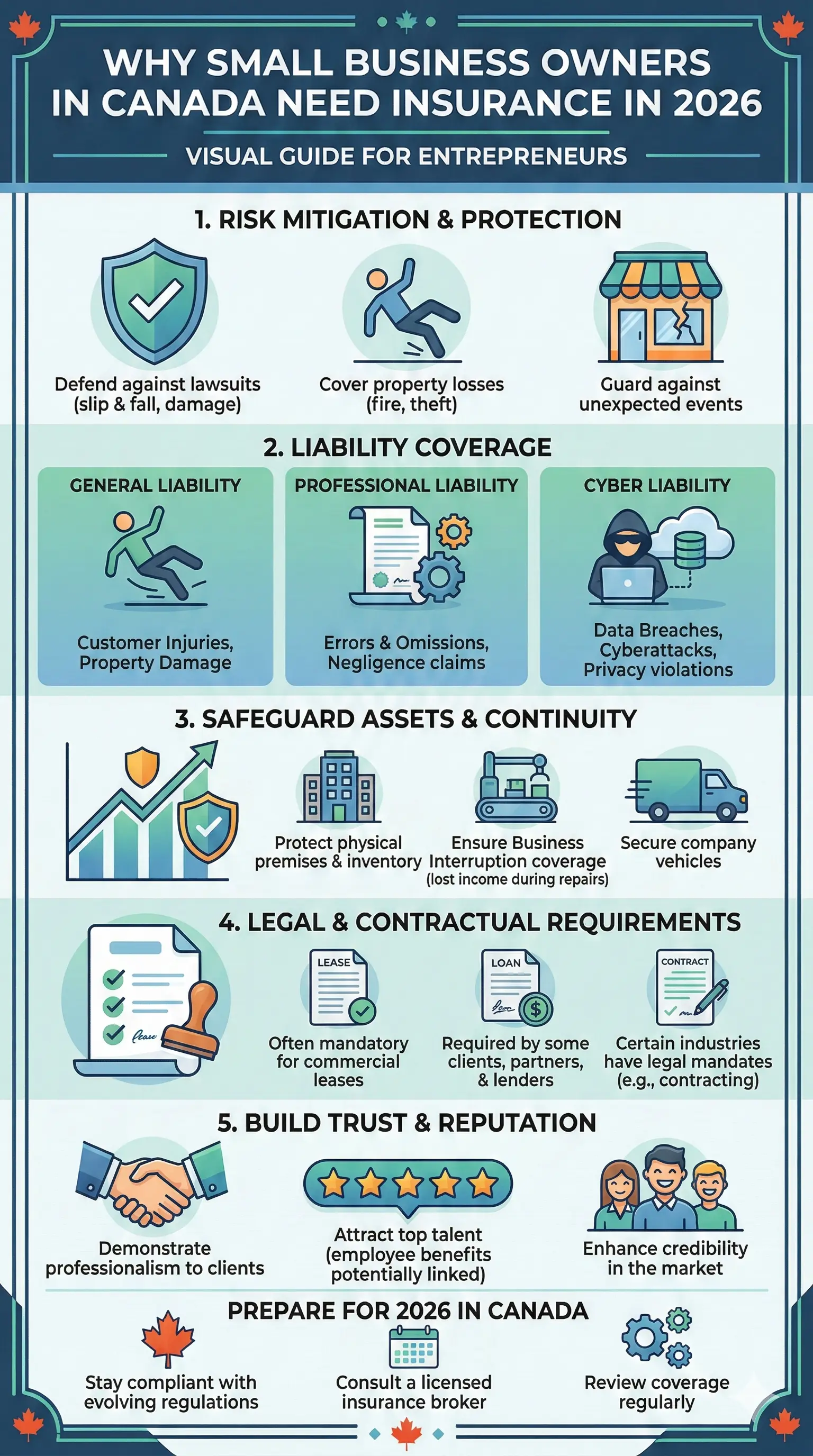
Why Small Business Owners in Canada Need Insurance in 2026
Canada's small businesses face unique challenges, from harsh winters damaging property in Niagara to cyber threats hitting Toronto consultants. Insurance provides peace of mind, protecting your revenue, assets, and reputation when disasters strike. Without it, a single claim could wipe out years of hard work.
Provincial Insurance Acts govern policies, dictating cancellation rules, wordings, and mandatory coverages. For instance, if you employ staff, workers' compensation is legally required in most provinces to shield you from injury-related liability. Commercial auto insurance is mandatory for business vehicles, while general liability is often contractually demanded by clients and landlords.
In 2026, trends like frequent data breaches make cyber coverage critical, even if overlooked by many. A CFIB survey shows only 36% of SMEs reviewed their market options in the past year—don't be among them.
Mandatory vs Recommended Business Insurance in Canada
Not all coverage is legally required, but skipping recommended policies leaves gaps. Here's the breakdown for 2026:
- Workers' Compensation: Mandatory if you have employees in most provinces. Covers on-the-job injuries and protects you from lawsuits. Register via your provincial board, like WorkSafeBC or WSIB in Ontario.
- Commercial Auto Insurance: Required for vehicles used in business operations, beyond personal policies.
- General Liability (CGL): Not always mandatory but essential. Covers third-party injuries or property damage from your work. Most clients require at least $2 million in coverage.
- Property Insurance: Recommended for physical assets like tools, inventory, or storefronts against fire, theft, or vandalism.
- Professional Liability (E&O): Crucial for consultants or advisors if bad advice causes client losses.
- Business Interruption: Pays operating expenses if you're forced to close due to covered events like floods.
Provincial Variations to Watch
Requirements differ: Ontario businesses near Niagara must update for weather risks, while Alberta firms face unique exclusions under provincial acts. Always check local rules via resources like the Insurance Bureau of Canada (IBC).
How Much Does Business Insurance Cost in Canada 2026?
Costs vary by revenue, location, industry, and risk. For a standard $2 million CGL policy, expect these annual premiums:
| Coverage Type | Estimated Annual Cost (Low-Risk Small Business) | Example (Toronto Contractor) |
|---|---|---|
| General Liability ($2M) | $500–$1,500 | $1,200 |
| Property (Basic) | $800–$2,000 | $1,500 |
| Professional Liability | $600–$1,800 | $900 |
| Cyber Liability | $1,000–$3,000 | $1,800 |
Rates based on 2026 estimates for businesses under $1M revenue; bundling saves 10–20%.
Factors like claims history or safety features can lower premiums. Shop associations for discounts.
Business Insurance Checklist for 2026: Stay Protected
Annual reviews prevent gaps as your business grows. Use this actionable checklist tailored for Canadian owners:
- Review Liability Limits: Ensure they match contracts and revenue growth.
- Update Assets: Value equipment, inventory, and property accurately—no estimates.
- Check Business Interruption: Align with current revenue and expenses.
- Add Cyber Protection: If handling customer data, cover breaches and ransomware.
- Update for Changes: New staff, vehicles, or services? Notify your insurer.
- Understand Exclusions: Read deductibles, endorsements, and fine print to avoid claim denials.
For Niagara or Edmonton owners, local brokers address regional risks like weather or growth trends.
Top Business Insurance Trends Shaping 2026
Stay ahead with these key shifts:
- Cyber Liability Surge: Ransomware attacks are rampant; courts demand due diligence.
- Contract Scrutiny: Review indemnity clauses to prevent disputes.
- Risk Management Focus: Training and tools lower premiums.
- Bundled Policies: All-in-one packages for small businesses, customized by province.
- Emerging Risks: Climate events and AI-related liabilities on the rise.
How to Get and Choose the Right Business Insurance
Follow these steps for tailored coverage:
- Assess Risks: Detail operations, location, assets, revenue, employees, and inventory.
- Gather Financials: Share accurate data for precise quotes.
- Consult Experts: Use brokers specializing in your industry, like those serving 12,000+ small clients.
- Shop Around: Compare quotes, bundling, and discounts. Only 36% review annually—do better.
- Evaluate Options: Check limits, deductibles, and exclusions against your operations.
- Review Regularly: Annually or after changes.
Resources: Financial Consumer Agency of Canada for types, IBC for coverage keys.
FAQ: Common Business Insurance Questions for 2026
1. Is business insurance mandatory in Canada?
Yes for workers' comp (with employees) and commercial auto; others are often contractually required.
2. How much liability coverage do I need?
Start with $2 million CGL; adjust per contracts and risks.
3. What's the average cost for small businesses?
$500–$3,000 annually per policy, depending on factors like location.
4. Do I need cyber insurance?
Essential if handling data; breaches are increasingly common.
5. How often should I review my policy?
Annually, or after business changes like growth or new services.
6. Can I bundle insurance for savings?
Yes, combining CGL, property, and more often cuts costs by 10–20%.
Next Steps: Secure Your Business Today
Don't wait for a claim—grab your checklist, contact a local broker, and get quotes from multiple insurers. Invest in risk management like employee training to lower premiums and build resilience. With the right Business Insurance Canada 2026 plan, you'll focus on growth, not worries. Start protecting your Canadian dream now.