Food Prices Canada 2026: Why Groceries Cost So Much and How to Save
If you've noticed your grocery bills climbing steeply, you're not imagining it. Food prices in Canada have surged dramatically since 2019, and 2026 is shaping up to be another challenging year for hou...
The Lifetimes Canada editorial team curates, fact-checks, and updates guides on personal finance, property, health, immigration, legal, business, and lifestyle topics relevant to Lifetimes Canada readers. Articles are produced with AI assistance and reviewed by the editorial team before publication.
If you've noticed your grocery bills climbing steeply, you're not imagining it. Food prices in Canada have surged dramatically since 2019, and 2026 is shaping up to be another challenging year for household budgets. Understanding what's driving these increases and knowing where to find relief can help you stretch your food budget further.
The Current State of Food Inflation in Canada
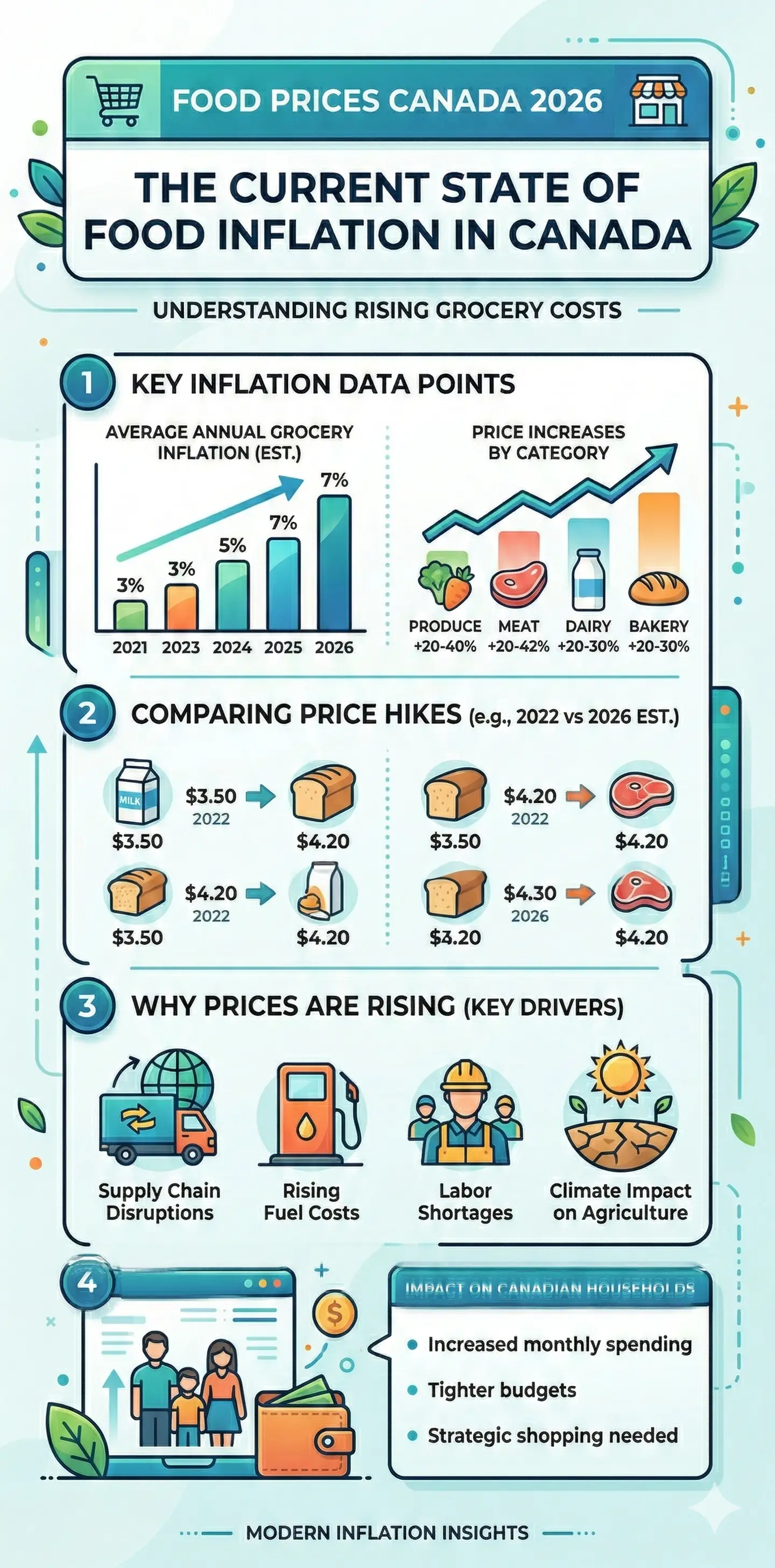
Food inflation in Canada reached 7.30 per cent in January 2026 compared to the same month last year. This represents a significant jump from the 6.2 per cent increase recorded between December 2024 and December 2025. To put this in perspective, grocery prices in Canada are now over 30 per cent higher than they were in 2019.
The impact on Canadian households is substantial. The average family of four is expected to spend $17,571.79 on food in 2026, up by nearly $1,000 from the previous year. For lower-income households, the squeeze is particularly severe—families in the lowest-income quintile spend approximately 27 per cent of their disposable income on food and non-alcoholic beverages.
While overall consumer price inflation has cooled to 2.3 per cent, food remains a persistent problem. Food purchased from stores increased 4.8 per cent year-over-year in January 2026, though this was down slightly from 5.0 per cent in December.
Why Are Food Prices Climbing So Fast?
Global Supply Chain Disruptions and Import Costs
The primary driver of Canada's food inflation isn't domestic—it's global. Bank of Canada research indicates that the acceleration in food inflation last year was almost entirely driven by rising import costs, not factors within Canada. This makes sense when you consider that Canada relies heavily on imported food items and raw materials.
Meat and Protein Shortages
One of the most dramatic price increases has been in the meat category. Beef prices skyrocketed by 19 per cent in early 2025 due to record-low cattle numbers caused by long-term droughts. This shortage has created a ripple effect, pushing consumers toward chicken as an alternative—but poultry prices have climbed substantially as well.
Canada has been working to stabilise beef supplies by strengthening import partnerships with Mexico and Australia, but experts expect the squeeze on meat prices to continue until at least 2027.
Trade Disputes and Tariffs
Trade tensions with the U.S. in 2025 caused significant price volatility for imported goods like coffee and orange juice. Even though counter-tariffs were lifted in September, price increases for food show few signs of abating. Canadians have seen particularly large price hikes for coffee compared to their American counterparts.
Labour Shortages in Agriculture
Reforms to the Temporary Foreign Worker Program have created labour shortages in Canada's agricultural sector, leading to higher production costs. These increased costs are ultimately passed on to consumers at the checkout.
Specific Food Categories Hit Hardest
Some food categories have experienced steeper price increases than others. The largest jumps have been in:
- Meat and poultry – experiencing double-digit percentage increases
- Coffee and tea – seeing above-average increases, particularly coffee
- Eggs – prices climbing due to supply constraints
- Fresh produce – though some items like berries, oranges, and melons have recently declined
In contrast, fresh fruit prices actually declined 3.1 per cent in January 2026 after a 4.5 per cent increase in December, thanks to generally strong harvests in producer regions.
What's the Outlook for 2026?
The Canada Food Price Report forecasts an overall food price increase of 4 to 6 per cent for 2026. This means further pressure on household budgets throughout the year. However, there are some signs of moderation—food inflation is expected to trend around 3.20 per cent by the end of the first quarter, and longer-term projections suggest it will settle around 2.90 per cent in 2027.
Government Support: The Canada Groceries and Essentials Benefit
Recognising the strain on Canadian households, Prime Minister Mark Carney's government announced the Canada Groceries and Essentials Benefit in January 2026. This program is designed to help lower- and moderate-income Canadians cope with rising costs of living.
The benefit includes:
- A one-time transfer to eligible Canadians in 2026
- An increase in the annual GST credit over a five-year period
- Expanded support specifically targeting food and shelter costs
The parliamentary budget officer estimated the total cost of the program to be $12.4 billion by 2030-31. If you're a lower-income Canadian, it's worth checking your eligibility and ensuring you're receiving all available credits through the Canada Revenue Agency (CRA).
Practical Strategies to Save on Groceries
Shop Smart and Plan Ahead
Creating a meal plan before you shop helps you avoid impulse purchases and reduces food waste. Focus on items that are currently affordable—fresh fruits like berries, oranges, and melons are experiencing price declines, making them good value right now.
Buy Generic and Store Brands
Store-brand products are typically 20-30 per cent cheaper than name brands and often have comparable quality. Canadian grocery chains offer extensive private-label options.
Reduce Meat Consumption
With beef and poultry prices elevated, consider reducing meat portions or exploring plant-based proteins like beans, lentils, and tofu. These alternatives are often significantly cheaper and provide excellent nutritional value.
Embrace Seasonal Produce
Seasonal fruits and vegetables are cheaper and fresher. In early 2026, fresh fruit prices are declining, so stock up on berries, oranges, and melons while prices are down.
Use Loyalty Programs and Digital Coupons
Most Canadian grocery chains offer loyalty programs with digital coupons and personalised discounts. These can add up to meaningful savings over time.
Buy in Bulk Strategically
Non-perishable items and frozen goods purchased in bulk can offer savings, but only if you'll actually use them before they expire.
Restaurant Prices Are Rising Even Faster
It's not just grocery stores—eating out has become significantly more expensive. Food purchased from restaurants increased 12.3 per cent in January 2026 compared with a year earlier. This jump is partly due to the end of the federal GST holiday on restaurant meals that was in effect in January 2025.
If you're looking to stretch your budget, preparing meals at home is increasingly the more economical choice.
Frequently Asked Questions
Why is food inflation in Canada higher than in the U.S.?
Canada's food prices have moved similarly to those in the U.S., driven by global factors, but Canadian food inflation has been higher in recent months. This is partly due to counter-tariffs on U.S. imports and earlier weakness in the Canadian dollar.
Am I eligible for the Canada Groceries and Essentials Benefit?
The benefit is targeted at lower- and moderate-income Canadians. To determine your eligibility, visit the Canada Revenue Agency website or contact them directly. The program includes both a one-time payment in 2026 and an increase in the annual GST credit.
Which foods are experiencing the biggest price increases?
Meat (particularly beef, up 19 per cent), poultry, coffee, tea, and eggs have seen the largest increases. However, fresh fruits like berries, oranges, and melons have recently declined in price.
When will food prices stabilise?
Food inflation is expected to moderate in 2027, with projections suggesting rates around 2.90 per cent. However, meat prices are expected to remain elevated until at least 2027 due to ongoing cattle shortages.
How much more are Canadian families spending on food compared to 2019?
The average Canadian is spending over $1,600 more per year on groceries than they did before the pandemic. For a family of four in 2026, the expected annual food spending is $17,571.79.
Should I be shopping at different stores to find better prices?
Food prices have increased relatively consistently across Canadian retailers, as they're all facing the same global supply and cost pressures. However, using loyalty programs, digital coupons, and shopping sales at different stores can still yield savings.
Moving Forward
Food inflation remains one of the most pressing cost-of-living challenges for Canadian households in 2026. While prices are expected to moderate somewhat in the coming years, the reality is that groceries will likely remain more expensive than they were pre-pandemic.
The best approach is to combine practical shopping strategies—planning meals, buying seasonal produce, reducing meat consumption, and using loyalty programs—with taking full advantage of government support like the Canada Groceries and Essentials Benefit. If you haven't already, verify your eligibility for all available tax credits and benefits through the CRA.
By staying informed about which foods are experiencing price increases and adjusting your shopping habits accordingly, you can help protect your household budget during this challenging period.