Top In-Demand Jobs in Canada for Immigration 2026
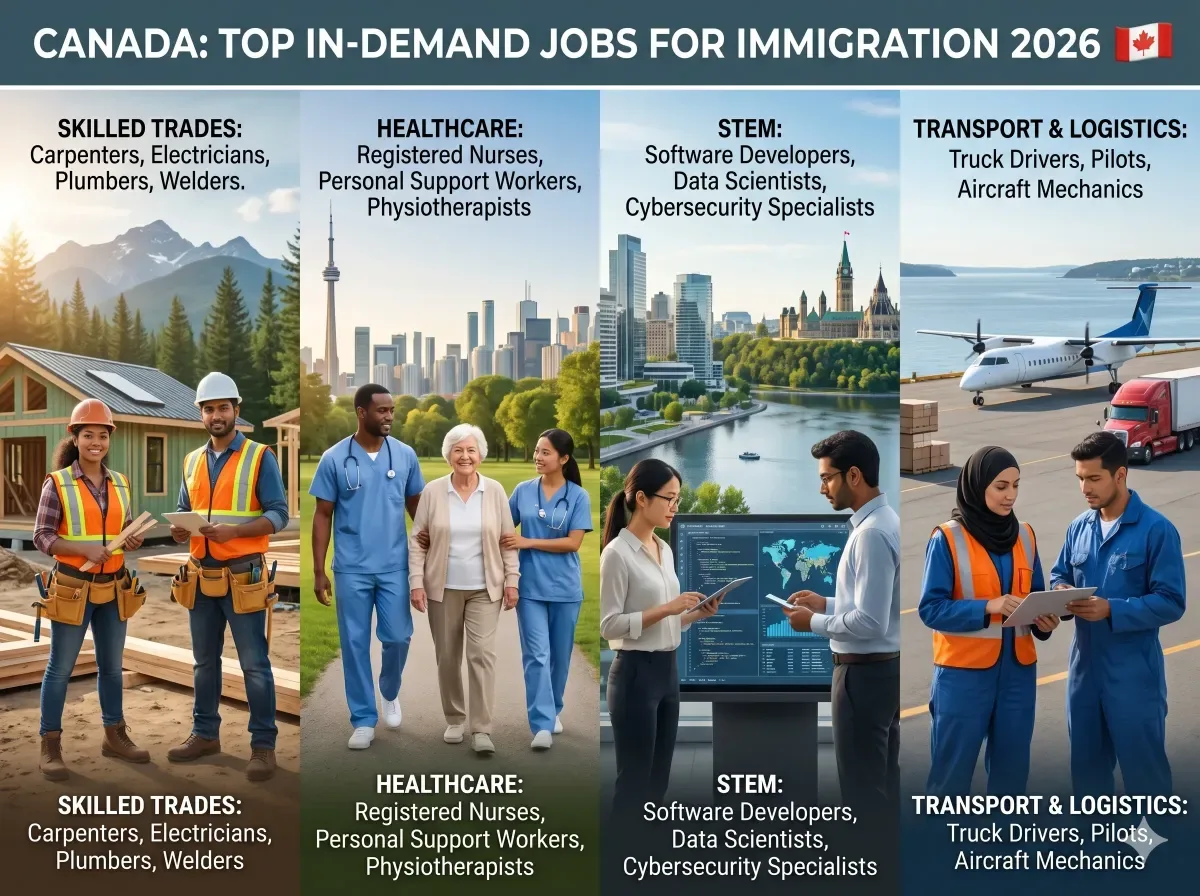
Canada’s immigration landscape is shifting rapidly as we move into 2026. With labour shortages persisting across key sectors and the government actively targeting newcomers to fill critical gaps, know...
The Lifetimes Canada editorial team curates, fact-checks, and updates guides on personal finance, property, health, immigration, legal, business, and lifestyle topics relevant to Lifetimes Canada readers. Articles are produced with AI assistance and reviewed by the editorial team before publication.
Canada’s immigration landscape is shifting rapidly as we move into 2026. With labour shortages persisting across key sectors and the government actively targeting newcomers to fill critical gaps, knowing which professions are in highest demand has never been more important. Whether you’re an aspiring immigrant, a newcomer already in the country, or a Canadian worker looking to pivot your career, understanding the top in-demand jobs in Canada for immigration 2026 can help you plan your next move with confidence.
Why These Jobs Matter for Immigration in 2026
Canada’s immigration system is designed to align with economic needs. Programs like Express Entry, the Provincial Nominee Program (PNP), and the Atlantic Immigration Program prioritise candidates with skills in high-demand occupations. The federal government publishes annual updates through Employment and Social Development Canada (ESDC) and Immigration, Refugees and Citizenship Canada (IRCC), which signal where the biggest labour gaps exist [1].
For 2026, the focus remains on healthcare, technology, trades, and skilled labour — areas where Canada’s aging population and economic growth continue to create sustained demand. Here’s a breakdown of the sectors and specific roles you should be watching.
Healthcare and Social Assistance
Canada’s healthcare system is under immense pressure. An aging population, combined with pandemic-era burnout among existing staff, has created acute shortages. According to Statistics Canada, healthcare and social assistance was the largest employer in the country by early 2025, and demand has only grown [2].
Registered Nurses and Nurse Practitioners
Registered nurses (RNs) and nurse practitioners (NPs) consistently top the list of in-demand roles. Provinces like Ontario, British Columbia, and Quebec are actively recruiting internationally educated nurses through fast-track licensing programs. The Canadian Institute for Health Information reports that Canada will need an additional 60,000 nurses by 2030 to meet demand [3].
Physicians and Specialists
Family doctors, psychiatrists, and specialists such as cardiologists and anaesthesiologists are in high demand, particularly in rural and northern communities. The federal government’s Rural and Northern Immigration Pilot has been expanded to attract healthcare professionals to underserved areas [4].
Personal Support Workers (PSWs) and Care Aides
With long-term care facilities struggling to staff adequately, PSWs are increasingly sought after. While this role typically requires less formal education than nursing, it offers strong pathways to permanent residency through provincial nominee programs.
Technology and Information Technology
Canada’s tech sector continues to grow, especially in cities like Toronto, Vancouver, Montreal, and Calgary. The federal government’s Global Talent Stream helps expedite work permits for tech professionals, and many roles are eligible for Express Entry.
Software Engineers and Developers
Software engineers, full-stack developers, and mobile app developers remain in high demand. The Information and Communications Technology Council (ICTC) projects that Canada will need over 250,000 tech workers by 2027 [5].
Data Scientists and AI Specialists
Artificial intelligence and machine learning are booming, with hubs in Montreal, Toronto, and Edmonton. Data scientists, AI engineers, and machine learning specialists are among the most sought-after roles, with salaries often exceeding $100,000 per year.
Cybersecurity Analysts
As cyber threats increase, so does the need for cybersecurity professionals. The Canadian Centre for Cyber Security has highlighted a critical shortage of skilled analysts, making this a priority occupation for immigration [6].
Skilled Trades and Construction
Canada’s housing crisis and infrastructure needs have created a massive demand for skilled tradespeople. The federal government’s Express Entry category-based draws in 2025 and 2026 have specifically targeted trades occupations.
Electricians, Welders, and Carpenters
Electricians (especially industrial and construction), welders, and carpenters are consistently listed as in-demand across all provinces. The Red Seal program allows tradespeople to work anywhere in Canada, and many provinces offer expedited licensing for internationally trained workers.
Heavy Equipment Operators and Mechanics
With major infrastructure projects underway — including the Trans Mountain pipeline expansion and various transit projects — heavy equipment operators and mechanics are urgently needed. These roles often offer high wages and strong job security.
Plumbers and Pipefitters
Plumbers and pipefitters are essential for new housing construction and building maintenance. The Canadian Home Builders’ Association has warned that labour shortages in these trades are slowing housing starts [7].
Transport and Logistics
Canada’s supply chain relies heavily on trucking and logistics. The trucking industry faces a shortage of approximately 20,000 drivers, a number expected to grow as current drivers retire.
Truck Drivers (Long-Haul)
Long-haul truck drivers are in high demand, particularly in provinces like Alberta, Ontario, and British Columbia. The federal government has made it easier for truck drivers to obtain permanent residency through the PNP and the Agri-Food Immigration Pilot.
Warehouse and Logistics Managers
With e-commerce booming, warehouse managers, logistics coordinators, and supply chain specialists are increasingly needed. These roles often offer clear career progression and competitive salaries.
Education and Social Services
As Canada’s population grows, so does the need for educators and social service professionals. Early childhood educators (ECEs) are especially in demand due to the national $10-a-day childcare program, which has expanded access and created thousands of new jobs.
Early Childhood Educators (ECEs)
ECEs are needed across Canada, with provinces like Ontario, British Columbia, and Quebec actively recruiting. The federal government’s Early Learning and Child Care agreements with provinces have created a surge in demand for qualified ECEs [8].
Social Workers and Counsellors
Social workers, particularly those specialising in mental health, child protection, and Indigenous services, are in high demand. Many provinces offer immigration streams specifically for social service professionals.
How to Align Your Immigration Strategy with These Jobs
Knowing the top in-demand jobs in Canada for immigration 2026 is only the first step. Here’s how you can position yourself for success:
- Check your eligibility — Use the IRCC’s Come to Canada tool to see if your occupation qualifies for Express Entry, PNP, or other streams [9].
- Get your credentials assessed — For regulated professions like nursing or engineering, you’ll need an Educational Credential Assessment (ECA) and possibly a provincial licensing body assessment.
- Improve your language scores — Higher scores in English (IELTS or CELPIP) or French (TEF Canada) can significantly boost your Comprehensive Ranking System (CRS) points.
- Consider provincial programs — Each province has its own list of in-demand occupations. For example, Saskatchewan’s SINP targets truck drivers and healthcare workers, while Ontario’s OINP focuses on tech and trades.
- Explore the Global Talent Stream — If you’re in tech, this program can fast-track your work permit to just two weeks.
Next Steps for Your Immigration Journey
Canada’s doors remain wide open for skilled workers who can fill critical labour gaps. By focusing on the top in-demand jobs in Canada for immigration 2026, you can increase your chances of receiving an Invitation to Apply (ITA) and building a successful new life in Canada.
Start by researching your target province’s specific needs, getting your credentials assessed, and improving your language scores. Consider consulting a regulated Canadian immigration consultant (RCIC) for personalised advice. The earlier you align your profile with Canada’s priorities, the sooner you’ll be on your way.
Frequently Asked Questions
Sources & References
-
1
Employment and Social Development Canada — Labour Market Reports — www.canada.ca
-
2
Statistics Canada — Labour Force Survey — www.statcan.gc.ca
- 3
-
4
IRCC — Rural and Northern Immigration Pilot — www.canada.ca
-
5
Information and Communications Technology Council — Labour Market Reports — www.ictc-ctic.ca
-
6
Canadian Centre for Cyber Security — Cyber Security Workforce — www.cyber.gc.ca
-
7
Canadian Home Builders’ Association — Labour Shortage — www.chba.ca
-
8
Government of Canada — Early Learning and Child Care Agreements — www.canada.ca
-
9
IRCC — Come to Canada Tool — www.canada.ca
Related Articles

Healthcare Jobs in Canada for Foreign Workers 2026: Best PR Pathways
Canada’s healthcare system is facing unprecedented demand. With an aging population, a growing backlog of surgeries, and staffing shortages that have only intensified post-pandemic, provinces from Bri...

Trade Jobs in Canada for Immigration 2026: Electricians, Welders, and HVAC
If you're looking for a career that offers stability, strong wages, and a clear path to permanent residency in Canada, skilled trades deserve a serious look. For 2026, the federal government is active...