Trade Jobs in Canada for Immigration 2026: Electricians, Welders, and HVAC

If you're looking for a career that offers stability, strong wages, and a clear path to permanent residency in Canada, skilled trades deserve a serious look. For 2026, the federal government is active...
The Lifetimes Canada editorial team curates, fact-checks, and updates guides on personal finance, property, health, immigration, legal, business, and lifestyle topics relevant to Lifetimes Canada readers. Articles are produced with AI assistance and reviewed by the editorial team before publication.
If you're looking for a career that offers stability, strong wages, and a clear path to permanent residency in Canada, skilled trades deserve a serious look. For 2026, the federal government is actively recruiting electricians, welders, and HVAC technicians to fill critical labour shortages across the country. These aren't just jobs — they're high-demand roles with dedicated immigration streams that can fast-track your Canadian permanent residence.
Whether you're already working in a trade or considering a career change, this guide breaks down what you need to know about trade jobs in Canada for immigration in 2026, with a specific focus on electricians, welders, and HVAC technicians.
Why Skilled Trades Are a Top Immigration Priority in 2026
Canada's economy relies heavily on its skilled trades workforce. From building new homes to maintaining essential infrastructure, tradespeople keep the country running. Yet, a significant shortage persists. According to Statistics Canada, nearly 700,000 skilled trades workers are expected to retire by 2028 [1]. This "silver tsunami" is creating urgent demand for new talent.
The federal government has responded by making skilled trades a top immigration priority. In 2026, this means:
- Category-based Express Entry draws — Immigration, Refugees and Citizenship Canada (IRCC) now holds dedicated rounds of invitations for candidates with experience in specific trade occupations [2].
- Provincial Nominee Programs (PNPs) — Nearly every province and territory has streams targeting skilled trades, often with lower points thresholds than general streams.
- Streamlined credential recognition — The Red Seal Program allows qualified tradespeople to work anywhere in Canada without re-certifying, making mobility easier.
For electricians, welders, and HVAC technicians, the pathway has never been clearer.
Electricians: Wired for Success in Canada
Electricians are consistently among the most in-demand trades in Canada. With the push toward green energy, electric vehicle infrastructure, and smart home technology, the need for skilled electricians is only growing.
Job Outlook and Earnings
The Government of Canada's Job Bank projects very good employment prospects for electricians across most provinces through 2028 [3]. Average hourly wages range from $30 to $45, with experienced journeypersons earning significantly more, especially in remote or industrial settings.
Immigration Pathways for Electricians
- Express Entry (Federal Skilled Trades Program): Electricians fall under TEER 2 (NOC 72200) and are eligible for category-based draws.
- Provincial Nominee Programs (PNPs): Provinces like Ontario, British Columbia, Alberta, and Saskatchewan actively nominate electricians.
- Atlantic Immigration Program: A great option if you have a job offer from an employer in Atlantic Canada.
What You Need to Qualify
To work as an electrician in Canada, you'll generally need:
- A valid certificate of qualification (Red Seal endorsement is ideal)
- Proof of at least two years of full-time paid work experience in the trade
- Meeting language requirements (CLB 5 or higher for Express Entry)
Welders: Joining Canada's Industrial Backbone
Welders are essential to Canada's manufacturing, construction, and resource extraction sectors. From pipeline construction in Alberta to shipbuilding in Nova Scotia, welders are needed everywhere.
Job Outlook and Earnings
Welders (NOC 72106) enjoy strong demand, particularly in Western Canada. The median hourly wage is approximately $28, with experienced welders in heavy industrial settings earning $40 or more per hour [4]. The Job Bank rates the employment outlook as good to very good in most regions.
Immigration Pathways for Welders
- Express Entry (Federal Skilled Trades Program): Welders are included in category-based draws for trades occupations.
- Provincial Nominee Programs: Alberta's Accelerated Tech Pathway and Saskatchewan's Hard-to-Fill Skills Pilot are excellent options.
- Rural and Northern Immigration Pilot (RNIP): Many participating communities need welders for local industries.
What You Need to Qualify
- A valid welding certificate or Red Seal endorsement
- At least two years of paid work experience
- Language proficiency (CLB 5 for Express Entry)
- A valid job offer is often required for PNP streams
HVAC Technicians: Keeping Canadians Comfortable
Heating, ventilation, and air conditioning (HVAC) technicians are in high demand as Canada faces extreme weather patterns and stricter energy efficiency regulations. Retrofitting older buildings and installing new systems requires qualified professionals.
Job Outlook and Earnings
HVAC technicians (NOC 72402) enjoy a very good employment outlook across Canada. The median hourly wage is around $32, with experienced technicians earning $45 or more [5]. The push for heat pumps and energy-efficient systems is driving even higher demand.
Immigration Pathways for HVAC Technicians
- Express Entry (Federal Skilled Trades Program): HVAC technicians are included in trades category draws.
- Provincial Nominee Programs: Ontario's In-Demand Skills Stream and British Columbia's Entry Level and Semi-Skilled stream are popular options.
- Quebec Skilled Worker Program: Quebec has its own trades-focused immigration system with strong demand for HVAC workers.
What You Need to Qualify
- A valid trade certificate (Red Seal preferred)
- Gasfitter certification may be required in some provinces
- At least two years of paid work experience
- Language proficiency (CLB 5 or higher)
How to Get Started: A Step-by-Step Guide
- Assess your eligibility: Use the Come to Canada tool on canada.ca to see which programs you might qualify for.
- Get your credentials assessed: Contact the Canadian Council of Directors of Apprenticeship (CCDA) to understand how your foreign credentials compare to Canadian standards.
- Take language tests: You'll need IELTS General or CELPIP for English, or TEF Canada for French.
- Find a job offer: While not always mandatory, a valid job offer significantly boosts your chances. Use Job Bank, Indeed Canada, or provincial job boards.
- Apply for provincial nomination (if applicable): Many PNP streams require you to express interest in the province first.
- Submit your Express Entry profile: If you're eligible for the Federal Skilled Trades Program, create your profile and wait for an Invitation to Apply (ITA).
Financial Considerations for Skilled Trades Immigrants
Immigrating as a tradesperson comes with some unique financial factors:
- Proof of funds: You'll need to show you have enough money to support yourself and your family upon arrival. For 2026, the minimum is approximately $14,000 for a single applicant [6].
- Credential assessment fees: Plan for $500–$1,000 for trade certification assessments.
- Relocation costs: Moving to a province with high demand may require upfront investment.
- Union membership: Many trades in Canada are unionized, which can provide higher wages and benefits but may require initiation fees.
Your Next Steps
Trade jobs in Canada for immigration in 2026 represent one of the most accessible and rewarding pathways to permanent residence. Electricians, welders, and HVAC technicians are not just in demand — they're actively recruited by both the federal government and provinces.
Start by researching which province offers the best fit for your trade and lifestyle. Then, gather your credentials, take a language test, and begin your application. With the right preparation, you could be working in Canada within a year.
For the most current information, always check official sources like canada.ca and the CRA's immigration pages.
Frequently Asked Questions
Sources & References
-
1
Statistics Canada — Skilled Trades in Canada — www.statcan.gc.ca
-
2
IRCC — Category-Based Selection for Express Entry — www.canada.ca
-
3
Government of Canada Job Bank — Employment Outlook — www.jobbank.gc.ca
-
4
Job Bank — Welder Wage Data — www.jobbank.gc.ca
-
5
Job Bank — HVAC Technician Wage Data — www.jobbank.gc.ca
-
6
IRCC — Proof of Funds for Express Entry — www.canada.ca
Related Articles

Healthcare Jobs in Canada for Foreign Workers 2026: Best PR Pathways
Canada’s healthcare system is facing unprecedented demand. With an aging population, a growing backlog of surgeries, and staffing shortages that have only intensified post-pandemic, provinces from Bri...
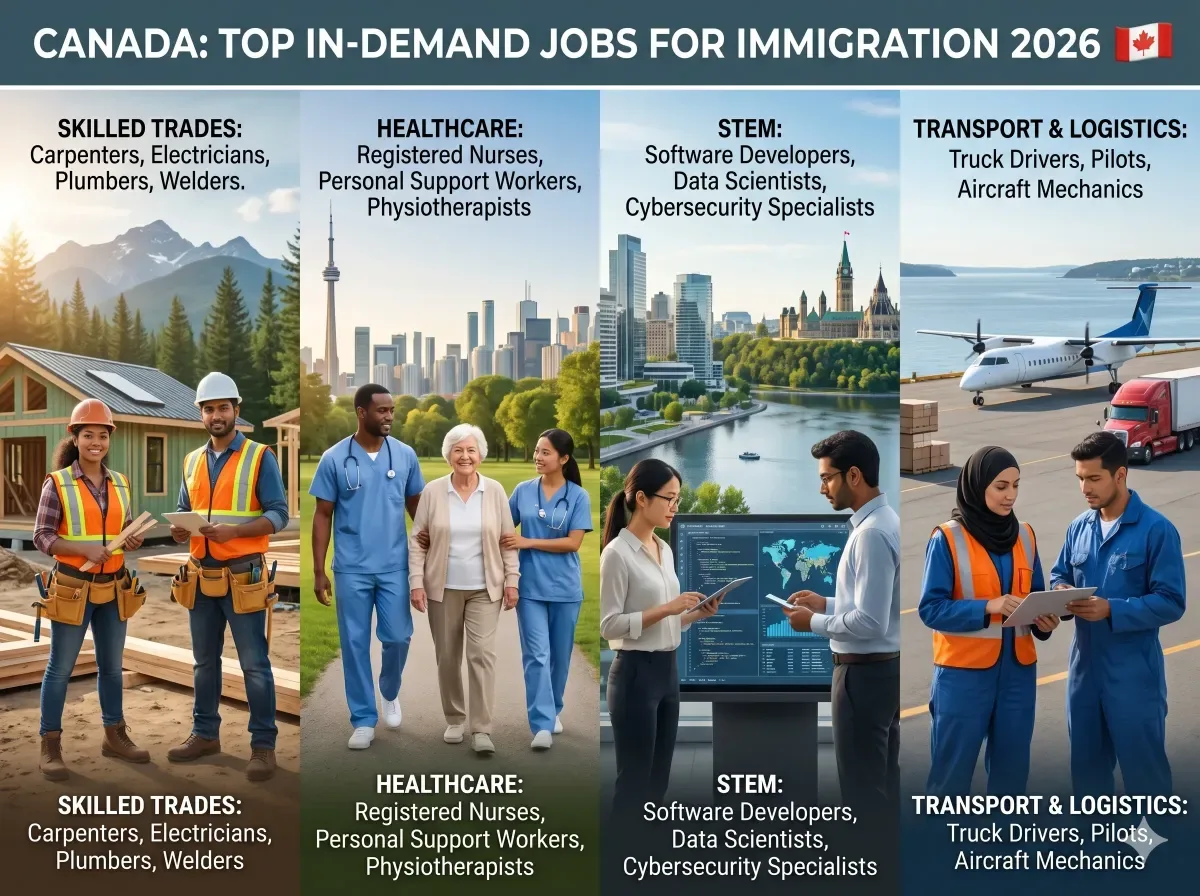
Top In-Demand Jobs in Canada for Immigration 2026
Canada’s immigration landscape is shifting rapidly as we move into 2026. With labour shortages persisting across key sectors and the government actively targeting newcomers to fill critical gaps, know...