Canada Study Permit Financial Requirements 2026: Cost of Living Updates
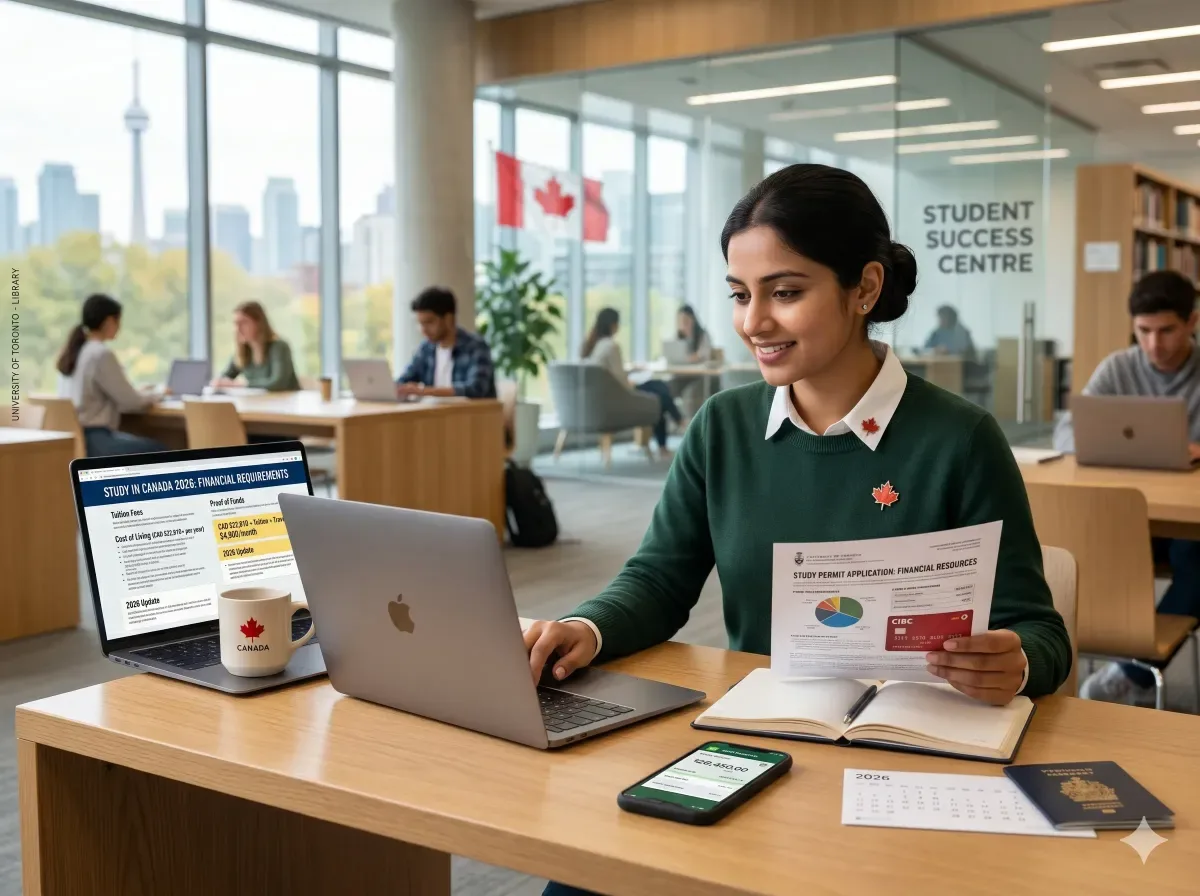
If you're planning to study in Canada in 2026, you've likely heard about the significant updates to the financial requirements for a study permit. The cost of living threshold — the amount of money yo...
The Lifetimes Canada editorial team curates, fact-checks, and updates guides on personal finance, property, health, immigration, legal, business, and lifestyle topics relevant to Lifetimes Canada readers. Articles are produced with AI assistance and reviewed by the editorial team before publication.
If you're planning to study in Canada in 2026, you've likely heard about the significant updates to the financial requirements for a study permit. The cost of living threshold — the amount of money you must prove you have to support yourself (and any accompanying family members) — has changed. Understanding these new numbers is crucial for a successful application, as failing to meet them can lead to a refusal.
This guide breaks down the 2026 Canada study permit financial requirements, explains the cost of living updates, and provides practical steps to ensure your application is complete and competitive.
Why the Financial Requirements Changed
For over two decades, the financial requirement for a single international student was set at just over $10,000 per year. This figure was based on outdated data and did not reflect the actual cost of living in Canada. In December 2023, Immigration, Refugees and Citizenship Canada (IRCC) announced a major update to better align with the real costs students face [1].
The change was driven by a need to ensure international students can genuinely afford to live and study in Canada without facing significant financial hardship. The new threshold is based on Statistics Canada's Low Income Cut-Off (LICO), which represents the minimum income a person needs to avoid spending a disproportionate share of their income on necessities like food, shelter, and clothing [2].
2026 Financial Requirements: The Numbers
For 2026, the financial requirement for a single applicant has been updated. While the exact figure may be adjusted annually based on inflation and LICO changes, the key principle remains the same. As of the latest update:
- Single applicant (student only): You must demonstrate you have at least $20,635 (not including tuition fees) for living expenses [1]. This is roughly double the previous threshold.
- Each additional family member (spouse or partner): An additional $5,159 per year.
- Each additional family member (child under 18): An additional $2,580 per child.
These amounts are in addition to your first year's tuition fees and any travel costs. Always check the official IRCC website for the most current figures, as they are updated annually in January [1].
How the Numbers Are Calculated
The requirement is based on 75% of the Low Income Cut-Off (LICO) for a single person in a community with a population of 500,000 or more [2]. This is a realistic benchmark for major study destinations like Toronto, Vancouver, Montreal, and Calgary. The LICO is recalculated each year by Statistics Canada, so the financial requirement will likely increase slightly each year to keep pace with inflation.
What Counts as Proof of Funds?
You must provide clear, verifiable evidence that you have access to these funds. IRCC accepts several forms of proof:
- Bank statements: From a Canadian bank account in your name, or from a bank in your home country. Statements should cover the last four months.
- Guaranteed Investment Certificate (GIC): A GIC from a participating Canadian financial institution is a strong option. You deposit the required amount, and it is returned to you in monthly instalments during your stay.
- Student or education loan: A letter from a financial institution confirming a loan specifically for your studies.
- Scholarship or bursary: Official documentation from the awarding body confirming the amount and duration of the award.
- Proof of funding from a sponsor: A letter from a parent, relative, or other sponsor, along with their bank statements to prove they have the funds.
- Proof of payment of tuition and accommodation: If you have already paid your first year's tuition and have a housing contract, this can be included.
Important Notes on Proof of Funds
Large, unexplained deposits are a red flag for visa officers. Any large sum deposited just before your application will likely be questioned. You should be able to trace the source of your funds (e.g., sale of property, inheritance, regular savings).
Funds must be readily available. You cannot use assets like property or vehicles as proof of liquid funds. The money must be in a bank account that you can access.
Additional Costs to Consider
The financial requirement covers living expenses only. You must also budget for:
- Tuition fees: These vary widely by institution and program. Expect to pay between $15,000 and $40,000 per year for undergraduate programs, and more for graduate or professional programs [3].
- Health insurance: Most provinces require international students to have health insurance. In British Columbia, Alberta, Saskatchewan, Manitoba, and the Yukon, you may be eligible for provincial health coverage after a waiting period. In other provinces, you must purchase private insurance.
- Travel costs: Airfare to Canada and transportation within the country.
- Books and supplies: Budget around $1,000 to $2,000 per year.
- Personal expenses: Clothing, entertainment, and other incidentals.
How to Prepare Your Financial Documents
A well-prepared financial package can significantly strengthen your application. Follow these steps:
- Calculate the total amount needed: Add your tuition for the first year, the living expense requirement ($20,635 for a single applicant), and any additional family member costs.
- Gather your documents: Collect bank statements, GIC certificates, loan letters, and scholarship documentation.
- Ensure documents are translated: If your documents are not in English or French, you must provide a certified translation.
- Explain the source of funds: Write a brief letter explaining how you have accumulated your funds (e.g., savings from employment, family support, sale of assets).
- Check for consistency: Ensure the information in your financial documents matches the information in your application form.
Next Steps for Your Application
Understanding the updated financial requirements is a critical first step. Here's what to do next:
- Check the official IRCC website for the most current figures, as they are updated annually [1].
- Calculate your total required funds including tuition, living expenses, and family costs.
- Start gathering your financial documents early. The more organized and transparent you are, the stronger your application will be.
- Consider opening a GIC with a Canadian bank to simplify the process and demonstrate financial readiness.
- Seek professional advice if your financial situation is complex or if you have questions about your specific circumstances.
By preparing thoroughly and understanding the 2026 financial requirements, you can submit a strong application and focus on what truly matters — your education and experience in Canada.
Frequently Asked Questions
Sources & References
-
1
Financial support for study permit applications — Canada.ca — www.canada.ca
-
2
Low Income Cut-Offs (LICOs) — Statistics Canada — www150.statcan.gc.ca
-
3
Tuition fees for international students — EduCanada — www.educanada.ca
-
4
Work off-campus as an international student — Canada.ca — www.canada.ca
-
5
Financial capacity for international students in Quebec — MIFI — www.immigration-quebec.gouv.qc.ca