How to Get Your Real Estate License in Ontario in 2026 (Humber College)
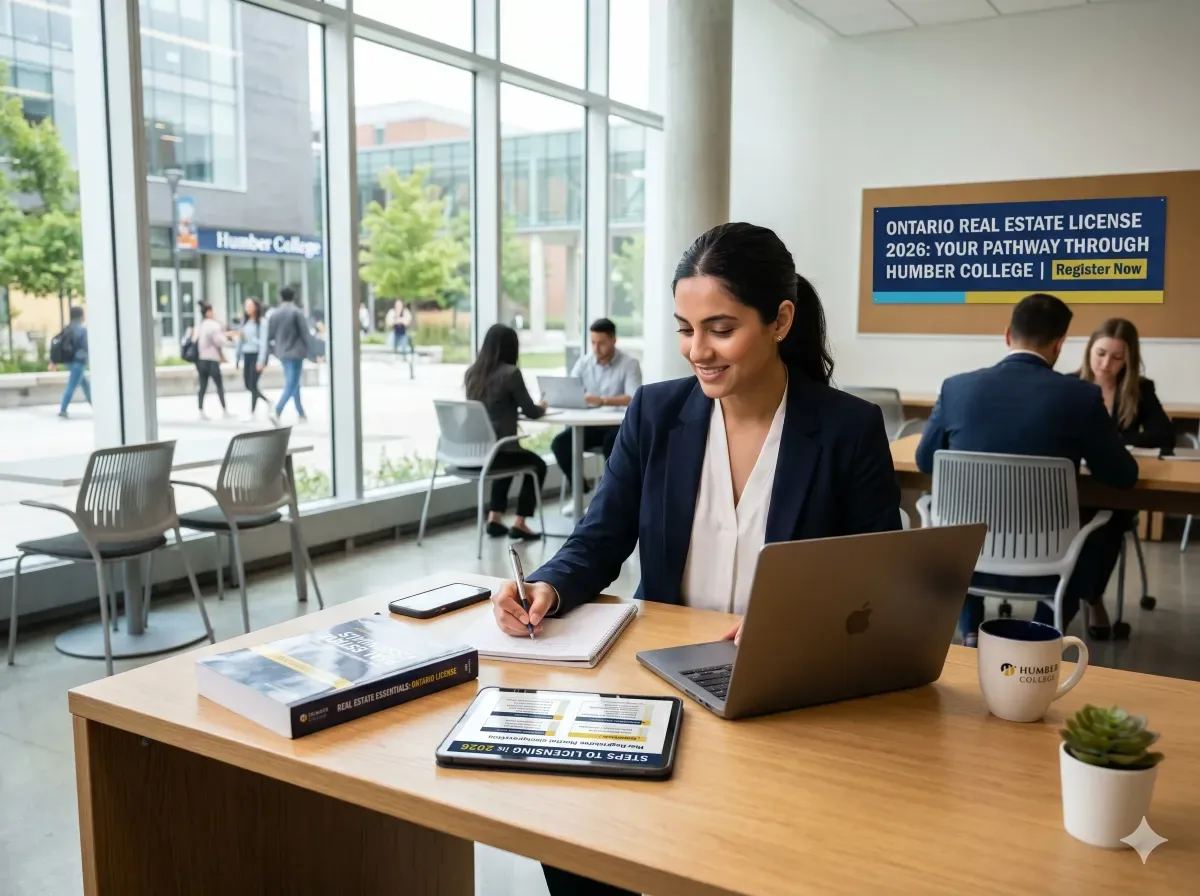
Thinking about a career in real estate? You're not alone. Every year, thousands of Canadians take the plunge into one of the most dynamic and potentially lucrative professions out there. If you're in...
The Lifetimes Canada editorial team curates, fact-checks, and updates guides on personal finance, property, health, immigration, legal, business, and lifestyle topics relevant to Lifetimes Canada readers. Articles are produced with AI assistance and reviewed by the editorial team before publication.
Thinking about a career in real estate? You're not alone. Every year, thousands of Canadians take the plunge into one of the most dynamic and potentially lucrative professions out there. If you're in Ontario and looking to start in 2026, you've likely come across the Humber College real estate program. It's one of the most popular and respected pathways to getting your licence. But the process can feel a bit like a maze. Let's break down exactly how to get your real estate license in Ontario in 2026 through Humber College, step by step, so you know what to expect.
Why Choose Real Estate in Ontario?
Before we dive into the how, let's look at the why. The real estate market in Ontario is consistently active, driven by a growing population and a strong economy. According to the Canadian Real Estate Association (CREA), home sales and prices have seen significant fluctuation, but the long-term trend points to a resilient market [1]. Becoming a licensed real estate agent gives you the flexibility to be your own boss, control your income potential, and help people navigate one of the biggest financial decisions of their lives. It's a career that offers genuine variety—one day you're showing a condo in Toronto, the next you're pricing a family home in the suburbs.
Step 1: Meet the Basic Eligibility Requirements
Before you even think about enrolling, you need to check the boxes set by the Real Estate Council of Ontario (RECO) and the Ontario Real Estate Association (OREA). These are non-negotiable:
- You must be at least 18 years old.
- You must be a Canadian citizen or a permanent resident (or have a valid work permit).
- You must have a clean criminal record (you'll need to provide a police check).
- You must have a high school diploma or equivalent (GED).
If you meet these, you're ready to move forward.
Step 2: Choose Your Education Provider — Why Humber College?
Ontario requires you to complete the Real Estate Salesperson Program through an approved educational provider. Humber College is one of the most reputable options, offering the program through its Humber College Institute of Technology & Advanced Learning. What makes Humber stand out?
- Flexibility: They offer both online and in-class options to fit your schedule.
- Reputation: Humber is a well-known, accredited institution in Ontario, which can add credibility to your resume.
- Support: They provide robust student support, including access to instructors and study resources.
The program is delivered in partnership with the Ontario Real Estate College (OREC), the official body that develops and administers the curriculum [2].
Step 3: Complete the Pre-Registration Courses (Phase 1)
The journey begins with Phase 1: Pre-Registration. This is a series of four mandatory courses that you must pass before you can register as a salesperson. These courses are:
- Real Estate as a Professional Career — Introduces ethics, professionalism, and the industry structure.
- Land, Structures and Real Estate Trading — Covers property types, land use, and basic trading concepts.
- The Real Estate Transaction – General — Focuses on the legal and procedural aspects of a sale.
- The Real Estate Transaction – Residential — Dives into residential sales, including contracts and negotiations.
Each course involves a final exam. You need to pass all four to move on. Humber College offers these courses in a structured format, often with live online sessions and recorded lectures. Expect to spend about 3–6 months on this phase, depending on your pace. The cost for these four courses through Humber is approximately $1,200–$1,500 (as of 2025, subject to change for 2026) [3].
Step 4: Register with RECO and Complete the Articling Period
Once you've passed all four pre-registration courses, you can apply to RECO to register as a Salesperson (Articling). This is a temporary status. You'll need to:
- Submit your application and pay the registration fee (around $550–$600).
- Provide a criminal record check.
- Provide proof of errors and omissions insurance (covered by your brokerage).
Now, here's the key: you cannot work independently yet. You must be sponsored by a brokerage (a real estate company). You'll work under a managing broker for a period of two years (the articling period). During this time, you can conduct transactions, but you are supervised. Humber's program doesn't place you with a brokerage, but they often provide career services and networking events to help you connect with firms.
Step 5: Complete the Post-Registration Courses (Phase 2)
Within the first two years of being registered, you must complete Phase 2: Post-Registration. This is a more advanced set of courses designed to deepen your knowledge. There are three mandatory courses:
- The Residential Real Estate Transaction — Advanced residential transactions.
- Commercial Real Estate — Introduction to commercial properties.
- Real Estate Practice and Brokerage — Focuses on running your business.
These courses are typically offered through Humber as well. The cost is similar to Phase 1, around $1,000–$1,200. You have up to two years to complete them, but it's wise to do so as soon as possible to get your full licence.
Step 6: Pass the Final Exam and Get Your Full Licence
After completing all post-registration courses, you'll take a comprehensive final exam administered by RECO. This exam tests everything you've learned. Once you pass, you'll be upgraded from "Articling" to a Full Salesperson status. You can now work independently (but still under a brokerage). Congratulations—you're officially a licensed real estate agent in Ontario!
Cost Breakdown for 2026 (Estimated)
Let's talk money. Here's a rough estimate of total costs through Humber College:
- Pre-registration courses (4): $1,200–$1,500
- Post-registration courses (3): $1,000–$1,200
- RECO registration fee: $550–$600
- Errors and omissions insurance: Included in brokerage fees (approx. $300–$500/year)
- Textbooks and materials: $200–$400
- Total estimated: $3,250–$4,200
These figures are based on 2025 rates and may increase slightly for 2026. Always check Humber's official website for the latest pricing [3].
Tips for Success from Humber Graduates
We spoke to a few Humber alumni who are now active agents. Here's their advice:
- Network early: Start building relationships with brokers during your pre-registration courses. Many will offer mentorship or job shadowing.
- Treat it like a business: Real estate is not a 9-to-5 job. Be prepared for irregular hours, weekends, and a lot of self-discipline.
- Use Humber's resources: They have a career centre, job boards, and alumni networks. Don't ignore them.
- Stay current: The market changes fast. Subscribe to industry newsletters from RECO and OREA to stay updated on regulations.
Next Steps: Your Action Plan for 2026
Ready to get started? Here's your checklist:
- Check eligibility: Ensure you meet RECO's requirements.
- Visit Humber's website: Go to humber.ca and search for "Real Estate Salesperson Program" to see course dates and fees.
- Apply: Submit your application for the pre-registration courses. Spaces can fill up, so don't wait too long.
- Study and pass: Dedicate time to your courses. Use Humber's study guides and practice exams.
- Register with RECO: After passing Phase 1, apply for your articling license.
- Find a brokerage: Network with local brokers or use Humber's career services to secure sponsorship.
- Complete Phase 2: Within two years, finish your post-registration courses and pass the final exam.
Getting your real estate license in Ontario in 2026 through Humber College is a clear, structured path. It requires dedication, financial investment, and a willingness to learn. But for those who are passionate about property and helping people, it's a career that offers incredible freedom and reward. Start today, and you could be closing your first deal before the end of the year.
Frequently Asked Questions
Sources & References
- 1
-
2
Ontario Real Estate College — Official Program Information — www.oreacollege.ca
-
3
Humber College — Real Estate Salesperson Program — humber.ca
Related Articles
Home Inspection Courses in Canada 2026: Licensing and Certification
Thinking about becoming a home inspector in Canada? It's a career that offers independence, variety, and the satisfaction of helping people make one of the biggest decisions of their lives. But before...

How to Get a Real Estate License in BC 2026 (UBC Sauder)
Thinking about a career change or a fresh start in British Columbia’s dynamic property market? You’re not alone. With the province’s population continuing to grow and housing demand remaining strong,...

Culinary Arts Schools in Canada 2026: George Brown vs George Brown vs Le Cordon Bleu
Are you dreaming of turning your passion for food into a thriving career in Canada's vibrant culinary scene? In 2026, choosing the right culinary arts school can set you on a path to success, whether...