Accelerated Nursing Programs in Canada 2026: Second Degree BSN
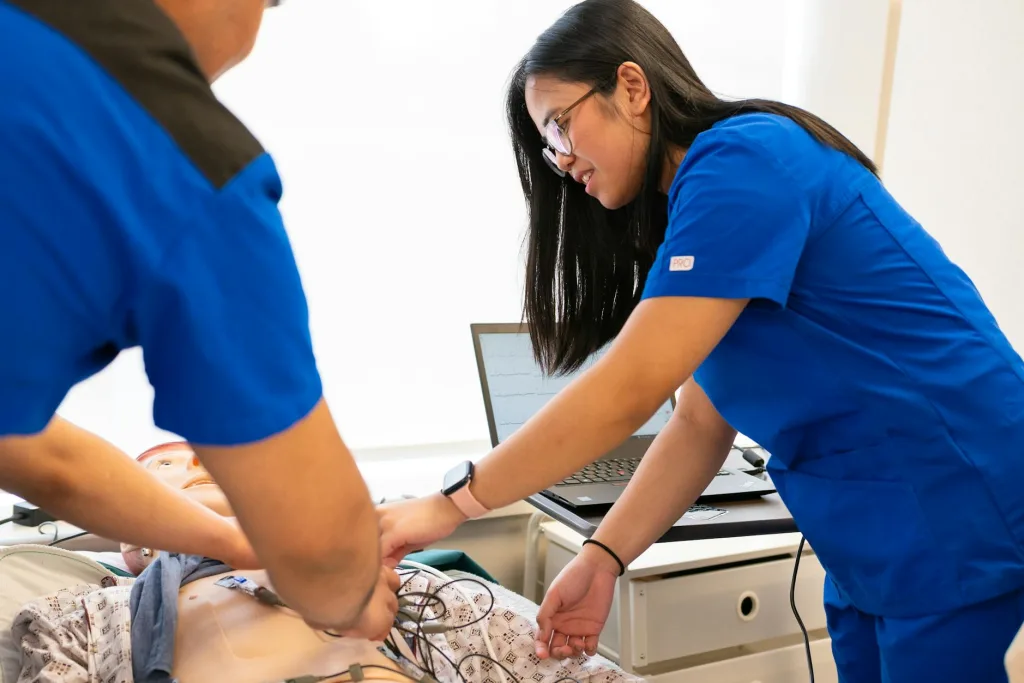
If you already hold a bachelor's degree in another field but feel called to nursing, you are not alone. Many Canadians are discovering that a second degree in nursing—often called an accelerated nursi...
The Lifetimes Canada editorial team curates, fact-checks, and updates guides on personal finance, property, health, immigration, legal, business, and lifestyle topics relevant to Lifetimes Canada readers. Articles are produced with AI assistance and reviewed by the editorial team before publication.
Is a Second Degree BSN the Right Move for You?
If you already hold a bachelor's degree in another field but feel called to nursing, you are not alone. Many Canadians are discovering that a second degree in nursing—often called an accelerated nursing program or second degree BSN—is a fast, focused path to a rewarding healthcare career. In 2026, with Canada facing ongoing healthcare staffing pressures, these programs have never been more relevant.
Accelerated nursing programs are designed for university graduates who want to transition into nursing without starting from scratch. They condense what would normally take four years into 18 to 24 months of intensive study and clinical placement. For Canadians looking for a meaningful career change with strong job security, this route is both practical and transformative.
In this guide, we will walk you through how these programmes work, what you need to apply, which Canadian universities offer them in 2026, and how to succeed once you are enrolled. We will also answer common questions about costs, admission requirements, and licensing.
What Is an Accelerated Nursing Program (Second Degree BSN)?
An accelerated nursing program is a compressed bachelor of science in nursing (BSN) for individuals who already hold a non-nursing bachelor's degree. Instead of repeating general education courses, you focus entirely on nursing theory, clinical skills, and professional practice. The result is a BSN in roughly two years, after which you are eligible to write the NCLEX-RN exam and become a registered nurse (RN) in Canada [1].
These programs are intense. You will typically take courses year-round, including summers, and complete hundreds of hours of clinical placements in hospitals, long-term care homes, and community health settings. However, for those committed to the profession, the accelerated timeline is a major advantage.
Why Consider an Accelerated Nursing Program in 2026?
Canada's healthcare system continues to face a critical shortage of registered nurses. According to the Canadian Institute for Health Information, over 60% of nurses report symptoms of burnout, and many are leaving the profession early [2]. At the same time, an aging population is increasing demand for care. The result is strong job prospects for new graduates.
Accelerated nursing programs are also appealing because they build on your existing education. If you have a degree in psychology, kinesiology, biology, or even the humanities, you already bring valuable skills—critical thinking, communication, research—that translate well into nursing.
Key Benefits at a Glance
- Faster path to practice: Graduate in 18–24 months instead of 4 years.
- High demand: RNs are among the most in-demand professionals in Canada.
- Competitive salary: Median RN salary in Canada is approximately $80,000–$95,000 depending on province and experience [3].
- Meaningful career change: Use your prior degree as a foundation for a helping profession.
- Government support: Some provinces offer bursaries or loan forgiveness for nursing students who commit to working in underserved areas.
How Accelerated Nursing Programs Work
Accelerated BSN programs are typically full-time and follow a compressed curriculum. You will cover the same core content as a traditional BSN student—anatomy, physiology, pharmacology, pathophysiology, mental health nursing, maternal-child nursing, and community health—but at a faster pace.
Most programs include a significant clinical component. You might spend 800 to 1,200 hours in supervised practice settings over the duration of the program. Clinical placements are often scheduled in blocks, sometimes requiring evening or weekend shifts. This is where you apply theory to real patients under the guidance of experienced preceptors.
Typical Program Structure
- Year 1 (Fall to Summer): Foundational nursing courses, health assessment, introduction to clinical practice, pathophysiology, pharmacology.
- Year 2 (Fall to Summer): Advanced medical-surgical nursing, mental health, maternal-child, community health, leadership, and preceptorship.
- Clinical placements: Rotations through medical-surgical units, emergency departments, pediatrics, long-term care, and community agencies.
Some programs are offered on a compressed calendar, meaning you attend classes year-round with short breaks between terms. Others may follow a modified semester system. Always check the specific calendar for your chosen university.
Admission Requirements for 2026
Admission to accelerated nursing programs is competitive. You will need to demonstrate academic readiness, relevant experience, and a genuine commitment to nursing. Requirements vary by institution, but common prerequisites include:
- A completed bachelor's degree in any discipline from a recognized university, with a minimum GPA (often 3.0 on a 4.0 scale, or B average).
- Prerequisite courses: Most programs require specific university-level courses such as human anatomy, physiology, microbiology, statistics, and sometimes psychology or sociology. These must be completed within a certain timeframe (e.g., within the last 5–10 years).
- CASPer test: Many Canadian nursing programs now require the CASPer (Computer-Based Assessment for Sampling Personal Characteristics), a situational judgment test that evaluates interpersonal skills, empathy, and ethical decision-making [4].
- Resume and personal statement: You will need to explain why you want to become a nurse and how your prior degree prepares you.
- References: Usually two academic or professional references.
- English or French proficiency: If your prior education was not in English or French, you may need to provide test scores (IELTS, TOEFL, etc.).
Tips for Strengthening Your Application
- Complete prerequisite courses with strong grades, especially anatomy and physiology.
- Gain volunteer or work experience in a healthcare setting (hospital, long-term care, community clinic).
- Prepare thoroughly for the CASPer test using practice scenarios.
- Write a compelling personal statement that connects your previous degree to nursing.
- Apply early—many programs have limited seats and rolling admissions.
Canadian Universities Offering Accelerated Nursing Programs in 2026
Several Canadian universities offer second degree BSN programs. Below is a selection of notable options. Always verify current program details and application deadlines directly with the institution, as offerings can change.
British Columbia
- University of British Columbia (UBC): 20-month accelerated BSN at the Vancouver campus. Requires prerequisite courses and CASPer [5].
- University of Victoria (UVic): 22-month accelerated option for students with a prior degree. Clinical placements throughout Vancouver Island.
Alberta
- University of Alberta: After Degree BScN program, 2 years full-time. Prerequisites include anatomy, physiology, and statistics.
- University of Calgary: Accelerated BSN pathway for degree holders, 2 years. Requires CASPer [6].
Ontario
- University of Toronto (U of T): Accelerated BScN program, 2 years. Highly competitive, requires strong GPA and CASPer [7].
- McMaster University: Accelerated BScN program, 24 months. Known for problem-based learning and strong clinical partnerships.
- Queen's University: Accelerated BScN program, 2 years. Requires prerequisite courses and CASPer [8].
- Western University: Compressed BScN program for degree holders, 2 years. Clinical placements in London and surrounding areas.
Quebec
- McGill University: Integrated BScN program for students with a prior degree (2 years). Requires prerequisite science courses. Instruction in English [9].
- Université de Montréal: Offers a condensed BScN pathway for degree holders (2 years). Instruction in French.
Atlantic Canada
- Dalhousie University: Accelerated BScN program, 2 years. Clinical placements in Halifax and rural Nova Scotia.
- Memorial University of Newfoundland: Accelerated BScN program, 2 years. Requires prerequisite courses and CASPer [10].
Costs and Financial Considerations
Tuition for accelerated nursing programs varies by province and institution. As a general estimate, expect to pay between $6,000 and $15,000 per year for domestic Canadian students. Some programs, particularly in Ontario and British Columbia, are on the higher end of that range.
Additional costs include textbooks, clinical uniforms, equipment (stethoscope, scrubs), health insurance, and transportation to clinical placements. You may also need to pay for criminal record checks, immunizations, and CPR certification.
Financial assistance is available. Many provinces offer bursaries or scholarships for nursing students. The Canada Student Loans Program also provides loans and grants for full-time post-secondary students. Some employers (e.g., health authorities) offer tuition reimbursement in exchange for a work commitment after graduation.
Licensing and Registration After Graduation
Once you complete an accelerated BSN program, you must pass the NCLEX-RN exam to become licensed as a registered nurse in Canada. The NCLEX-RN is a computer-adaptive test that assesses your nursing knowledge and clinical judgment. You can register for the exam through your provincial or territorial nursing regulatory body (e.g., the College of Nurses of Ontario, the British Columbia College of Nurses and Midwives) [11].
After passing the NCLEX-RN, you will be eligible for registration and can begin practicing as an RN. Many new graduates work in hospitals, long-term care, community health, or public health. With experience, you can specialize in areas such as critical care, emergency, pediatrics, or mental health.
Challenges to Consider
Accelerated nursing programs are demanding. The compressed timeline means you will be studying and in clinical placements nearly year-round. Burnout is a real risk if you do not manage your time well. Clinical placements may require travel, and you may need to adapt to shift work early on.
It is also important to ensure you meet all prerequisite requirements before applying. If you lack certain science courses, you may need to complete them through a university or college before you can apply. Planning ahead is essential.
Finally, accelerated programs are competitive. Not everyone who applies will be admitted. Having a backup plan—such as applying to multiple programs or considering a bridging program—is wise.
Next Steps: How to Get Started
If you are ready to explore accelerated nursing programs in Canada for 2026, here is a practical roadmap:
- Research programs: Visit the websites of universities listed above. Note admission requirements, prerequisite courses, and application deadlines.
- Assess your prerequisites: Compare your current transcript with program requirements. If you are missing courses, register for them as soon as possible.
- Prepare for the CASPer test: If required, familiarize yourself with the test format and practice sample scenarios. The CASPer is often a key factor in admissions.
- Gain healthcare experience: Volunteer or work in a healthcare setting to strengthen your application and confirm your career choice.
- Apply early: Deadlines vary, but many programs have applications due in the fall or winter for a September start. Apply to multiple programs to increase your chances.
- Plan your finances: Explore student loans, bursaries, and scholarships. Consider whether you can afford to study full-time for two years without significant paid work.
Accelerated nursing programs in Canada offer a fast, focused path to a career that is both in demand and deeply fulfilling. With careful planning and commitment, you can transition from your current field to nursing in just two years. The healthcare system needs skilled, compassionate nurses—and your prior education is an asset, not a setback.
Frequently Asked Questions
Sources & References
-
1
Nursing in Canada — Health Canada — www.canada.ca
- 2
-
3
Nursing Job Outlook — Job Bank Canada — www.jobbank.gc.ca
-
4
CASPer Test Overview — takecasper.com
-
5
UBC Accelerated BSN Program — nursing.ubc.ca
-
6
University of Calgary After Degree BScN — nursing.ucalgary.ca
-
7
University of Toronto Accelerated BScN — bloomberg.nursing.utoronto.ca
-
8
Queen's University Accelerated BScN — nursing.queensu.ca
-
9
McGill Integrated BScN Program — www.mcgill.ca
-
10
Memorial University Accelerated BScN — www.mun.ca
-
11
NCLEX-RN Exam Information — www.nclex.com
Related Articles

Pharmacy Technician Programs in Canada 2026: College Guide
Canada's healthcare system is evolving, and the role of pharmacy technicians has never been more critical. With an aging population and a growing emphasis on team-based care, pharmacies across the cou...

Best Massage Therapy Schools in Canada 2026: RMT Certification
Thinking about a career in massage therapy? It's a rewarding path that offers flexibility, the chance to help others, and strong job prospects across Canada. But the first big step is choosing the rig...

How to Become a Paramedic in Canada 2026: College Programs and Fitness Tests
If you've ever watched a paramedic team stabilise someone after a car accident or respond to a cardiac arrest, you know the job demands more than just a cool head. It requires a specific blend of medi...

Nutritionist vs Dietitian in Canada 2026: Education and Legal Differences
If you're thinking about seeing a nutrition professional in Canada, you might wonder whether to book an appointment with a dietitian or nutritionist. While these titles might sound interchangeable, th...