How to Become a Paramedic in Canada 2026: College Programs and Fitness Tests
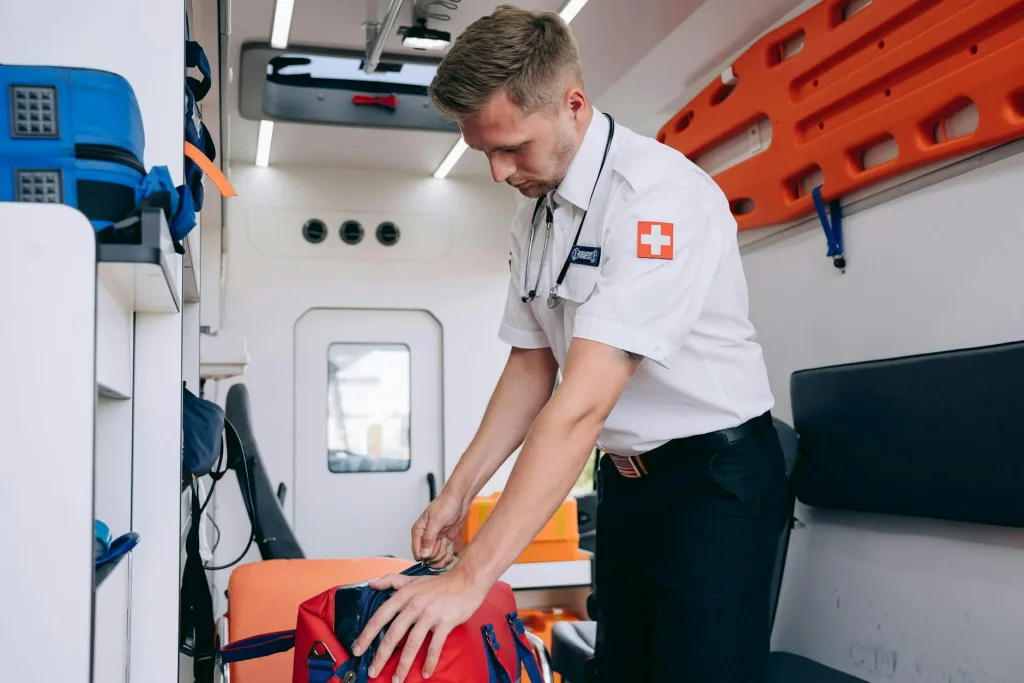
If you've ever watched a paramedic team stabilise someone after a car accident or respond to a cardiac arrest, you know the job demands more than just a cool head. It requires a specific blend of medi...
The Lifetimes Canada editorial team curates, fact-checks, and updates guides on personal finance, property, health, immigration, legal, business, and lifestyle topics relevant to Lifetimes Canada readers. Articles are produced with AI assistance and reviewed by the editorial team before publication.
If you've ever watched a paramedic team stabilise someone after a car accident or respond to a cardiac arrest, you know the job demands more than just a cool head. It requires a specific blend of medical knowledge, physical resilience, and quick decision-making. For Canadians considering this career, the path is well-defined but rigorous. By 2026, the landscape of paramedic education in Canada continues to evolve, with stronger emphasis on evidence-based practice, fitness standards, and mental health support. This guide breaks down exactly what you need to do to become a paramedic in Canada, from choosing the right college program to passing the physical fitness tests.
Understanding the Paramedic Levels in Canada
Before diving into programs, it's important to know that paramedicine in Canada is not a one-size-fits-all career. Most provinces recognise three primary levels of paramedic practice:
- Primary Care Paramedic (PCP) – The entry-level standard. PCPs handle basic life support, including oxygen therapy, defibrillation, and administering certain medications. Most college programs prepare you for this level.
- Advanced Care Paramedic (ACP) – Requires additional training beyond PCP. ACPs can perform advanced procedures like intubation, cardiac monitoring, and administer a wider range of drugs.
- Critical Care Paramedic (CCP) – The highest level, often working in air ambulance or specialised transport. CCPs manage complex, critically ill patients.
For most newcomers, the goal is to become a licensed PCP first. From there, you can pursue advanced certifications after gaining field experience.
Step 1: Meet the Prerequisites for Paramedic College Programs
Every college in Canada sets its own admission requirements, but there are common threads. To apply to a paramedic program in 2026, you'll typically need:
- A high school diploma or equivalent (GED accepted in most provinces)
- Grade 12 English (with a minimum grade, often 70% or higher)
- Grade 12 biology (many programs also require chemistry or physics)
- Grade 11 or 12 math (often Foundations of Math or Pre-Calculus)
- A current Standard First Aid with CPR Level C or HCP (Health Care Provider) certification
- A valid driver's licence (Class 5 or equivalent; some programs require Class 4 before clinical placements)
- A clear criminal record check with vulnerable sector screening
- Immunisation records (including Hepatitis B, Tetanus, and annual flu shot)
Some competitive programs also require a personal interview, a written entrance exam (like the CASPer or a program-specific test), and a physical fitness assessment as part of the admissions process.
Step 2: Choose an Accredited Paramedic College Program
In Canada, paramedic programs are accredited by the Canadian Medical Association (CMA) through its Conjoint Accreditation Services. Graduating from a CMA-accredited program is essential because it allows you to write the provincial or national certification exams [1].
Here are some of the most respected paramedic college programs across the country:
- British Columbia Institute of Technology (BCIT) – Offers a 2-year PCP diploma with strong clinical simulation facilities.
- SAIT (Southern Alberta Institute of Technology) – Known for its 2-year PCP diploma and close ties with Alberta Health Services.
- University of the Fraser Valley (UFV) – Offers both PCP and ACP pathways.
- Centennial College (Ontario) – Offers a 2-year PCP diploma and a 3-year advanced diploma in paramedicine.
- Humber College (Ontario) – Offers a 2-year PCP diploma with a focus on community paramedicine.
- Collège La Cité (Ontario, French-language) – Offers a 2-year PCP diploma for French-speaking students.
- College of the North Atlantic (Newfoundland and Labrador) – Offers a 2-year PCP diploma with strong rural and remote training components.
Program lengths vary. Most PCP diplomas take 2 years (4 semesters) of full-time study, though some accelerated programs exist. Tuition ranges from roughly $4,000 to $10,000 per year for domestic students, depending on the institution [2].
Step 3: Understand the Physical Fitness Test (PFT)
Paramedicine is physically demanding. You'll be lifting patients, carrying heavy equipment, and working in awkward positions for extended periods. Every accredited program and most employers require you to pass a Physical Fitness Test (PFT) before you can begin clinical placements or work.
The most common test in Canada is the Paramedic Physical Abilities Test (PPAT) or variations of it. While specific protocols differ by province and employer, the core components are similar:
- Lifting and carrying: You must lift a weighted stretcher (typically 70–90 kg) and carry it a set distance (often 30–50 metres) without stopping.
- Stair chair carry: You'll simulate carrying a patient down stairs using a stair chair, often with a partner, weighing 60–80 kg.
- Equipment carry: You'll carry a heavy equipment bag (20–30 kg) up and down stairs or across a distance.
- CPR endurance: You may need to perform continuous chest compressions for 2–5 minutes to simulate a cardiac arrest scenario.
- Agility and balance: Some tests include obstacle courses or ladder climbing to simulate accessing patients in tight spaces.
Most colleges require you to pass a PFT before you can start your clinical placements, typically in the second year. Some programs also have a pre-admission fitness test. It's wise to start a structured fitness programme at least three months before you apply, focusing on:
- Core strength and back health (deadlifts, planks, kettlebell swings)
- Cardiovascular endurance (running, cycling, rowing)
- Upper body strength (push-ups, pull-ups, bench press)
- Grip strength (farmer's carries, dead hangs)
If you have any pre-existing injuries or health conditions, consult a physiotherapist or exercise physiologist before beginning a training programme. Many paramedic services also offer fitness maintenance programmes once you're employed.
Step 4: Complete Your Clinical Placements and Ride-Alongs
Classroom learning is only part of the story. Every CMA-accredited paramedic program includes supervised clinical placements in hospitals and ambulance settings. You'll typically complete:
- Hospital placements: Rotations in emergency departments, operating rooms, and labour and delivery units to practice skills like intubation, IV insertion, and patient assessment.
- Ambulance ride-alongs: You'll be paired with a preceptor (an experienced paramedic) and respond to real 911 calls. This is where you apply your skills under pressure.
Placement hours vary by program, but expect between 400 and 800 hours of supervised clinical experience. These placements are unpaid, and you may need to travel to different communities, sometimes far from your college campus.
Step 5: Pass the Certification Exam
After graduating from an accredited program, you must pass a certification exam to become licensed. In most provinces, this is the Canadian Organization of Paramedic Regulators (COPR) exam [3]. The COPR exam is a national standard that tests your knowledge, critical thinking, and clinical decision-making. It consists of a multiple-choice component and an Objective Structured Clinical Examination (OSCE) where you demonstrate skills on simulated patients.
Once you pass the COPR exam, you apply for provincial licensure through your province's regulatory body. For example:
- British Columbia: Emergency Medical Assistants Licensing Board (EMALB)
- Alberta: Alberta College of Paramedics
- Ontario: Ministry of Health and Long-Term Care, Emergency Health Services Branch
- Quebec: Collège des médecins du Québec (via the paramedic regulatory framework)
Licensure fees vary but are typically between $200 and $500 per year. You must also maintain your certification through continuing education credits (often 20–40 hours per year) and renew your CPR and first aid certifications.
Step 6: Apply for Jobs and Prepare for the Workforce
Once licensed, you can apply for paramedic positions. Most paramedics in Canada work for provincial or municipal ambulance services, such as:
- BC Emergency Health Services (BCEHS)
- Alberta Health Services (AHS) Emergency Medical Services
- Sunnybrook Centre for Prehospital Medicine (Ontario)
- Regional ambulance services in smaller provinces
Job competition can be fierce, especially in urban centres like Vancouver, Toronto, and Calgary. Rural and remote communities often have higher demand and may offer signing bonuses or relocation assistance. Many new graduates start on a casual or part-time basis before securing full-time positions.
Salaries for PCPs in Canada range from approximately $50,000 to $80,000 per year, depending on experience and location. ACPs and CCPs earn significantly more, often exceeding $100,000 annually [4].
Next Steps: Your Action Plan for 2026
If you're serious about becoming a paramedic in Canada, here's a practical checklist to get started:
- Research programs: Visit the websites of CMA-accredited colleges in your province. Compare tuition, location, and clinical placement opportunities.
- Upgrade your prerequisites: If you're missing Grade 12 biology or English, enrol in an adult education or online course now.
- Get your first aid and CPR certifications: These are required for applications and will give you a head start.
- Start a fitness programme: Focus on strength, endurance, and functional movement. Consider working with a personal trainer who understands paramedic demands.
- Volunteer or job shadow: Contact your local ambulance service or hospital to see if you can observe a paramedic team. This will confirm your interest and strengthen your application.
- Apply early: Many programs have limited seats and competitive admission. Submit your application as soon as the window opens.
Becoming a paramedic is not easy, but it is one of the most meaningful careers you can choose. Every shift, you'll have the chance to make a real difference in someone's life. With the right preparation and commitment, you can join the ranks of Canada's dedicated paramedics by 2026.
Frequently Asked Questions
Sources & References
- 1
-
2
Statistics Canada – Tuition Fees for Canadian College Programs — www.statcan.gc.ca
- 3
-
4
Government of Canada Job Bank – Paramedic Wages and Outlook — www.jobbank.gc.ca
- 5
Related Articles
Pharmacy Technician Programs in Canada 2026: College Guide
Canada's healthcare system is evolving, and the role of pharmacy technicians has never been more critical. With an aging population and a growing emphasis on team-based care, pharmacies across the cou...
Best Massage Therapy Schools in Canada 2026: RMT Certification
Thinking about a career in massage therapy? It's a rewarding path that offers flexibility, the chance to help others, and strong job prospects across Canada. But the first big step is choosing the rig...
Accelerated Nursing Programs in Canada 2026: Second Degree BSN
If you already hold a bachelor's degree in another field but feel called to nursing, you are not alone. Many Canadians are discovering that a second degree in nursing—often called an accelerated nursi...

Nutritionist vs Dietitian in Canada 2026: Education and Legal Differences
If you're thinking about seeing a nutrition professional in Canada, you might wonder whether to book an appointment with a dietitian or nutritionist. While these titles might sound interchangeable, th...